Introduction
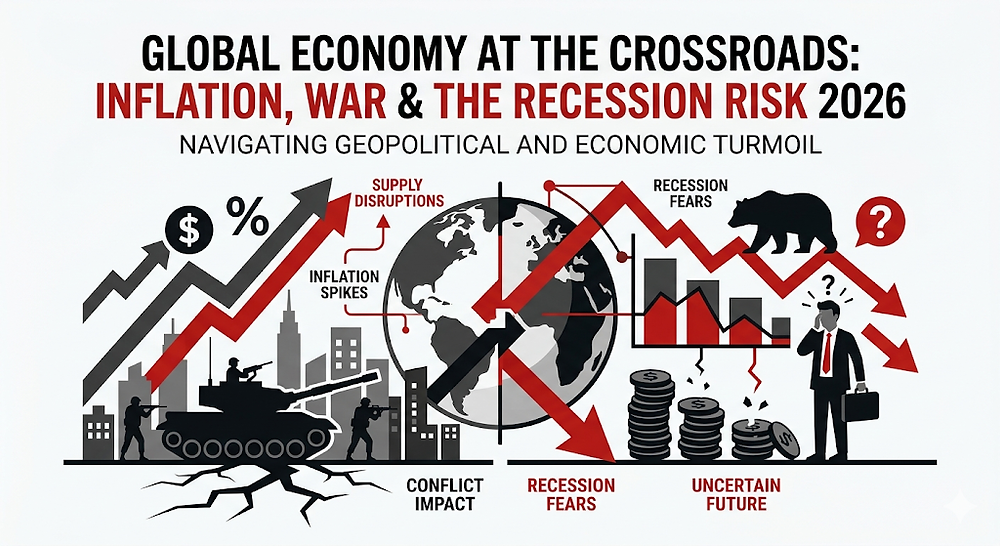
In 2026, the global economy is once again showing signs of instability. After a short period of recovery in previous years, inflation is rising in many countries, energy prices are fluctuating, and financial markets are reacting with uncertainty.
This article explains why inflation is increasing again, what factors are driving it, and how it is affecting ordinary people around the world.
What is Happening in the Global Economy?
The world economy is facing multiple pressure points at the same time:
- Rising oil and energy prices
- Supply chain disruptions in key regions
- Increased military and geopolitical tensions
- Higher government debt in many countries
These factors are combining and pushing inflation upward again.
Why Inflation is Rising Again in 2026
1. Energy Price Instability
Oil and gas prices remain one of the biggest drivers of inflation. Any disruption in supply routes or production directly impacts global prices.
When energy becomes expensive, everything becomes expensive—from transport to food production.
2. Geopolitical Tensions
Ongoing global tensions between major powers are increasing uncertainty in markets.
Investors become cautious, supply chains slow down, and trade costs increase. This indirectly contributes to rising inflation.
3. Supply Chain Pressure
Even after global recovery efforts, supply chains are still not fully stable.
Delays in shipping, manufacturing costs, and logistics issues are making goods more expensive.
4. Strong Demand in Developing Countries
Many developing economies are seeing increased consumer demand, but supply is not growing at the same speed.
This imbalance between demand and supply also increases prices.
Impact on Ordinary People
Inflation is not just an economic term—it directly affects daily life.
Common effects include:
- Higher grocery prices
- Expensive fuel and transport
- Increased utility bills
- Reduced savings value
People are now forced to adjust their spending habits due to rising costs.
Impact on Global Markets
Financial markets are also reacting to inflation trends.
- Stock markets show higher volatility
- Investors move toward safer assets
- Currency values fluctuate
- Businesses delay expansion plans
This creates uncertainty in long-term economic planning.
What Governments Are Doing
Different countries are taking steps to control inflation:
- Increasing interest rates
- Controlling fuel subsidies
- Improving trade policies
- Supporting local production
However, results vary depending on each country’s economic strength.
Future Outlook
Experts believe the global economy will follow one of these paths:
1. Stabilization
Inflation gradually decreases as supply chains improve.
2. Slow Recovery
Prices remain high for some time before slowly stabilizing.
3. Continued Volatility
If global tensions continue, inflation may stay unpredictable.
Conclusion
The global economy in 2026 is going through another inflation phase driven by energy prices, geopolitical tensions, and supply chain challenges.
While governments are trying to control the situation, the impact is already being felt worldwide. Understanding these changes can help individuals and businesses make better financial decisions.
SEO Tip
For better website authority, link this article with related topics such as:
- AI SEO Guide 2026
- E-E-A-T SEO Strategy
- Topical Authority Guide
- Backlinks Strategy 2026
Leave a Reply