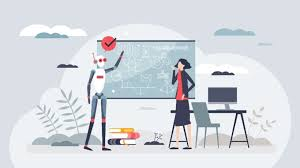
In recent years, Artificial Intelligence (AI) has increasingly become a part of education. From adaptive learning platforms to AI tutors and predictive analytics, technology promises personalized instruction, instant feedback, and data-driven insights. At the same time, human teachers remain central to education, providing mentorship, empathy, and social guidance that machines cannot replicate. The challenge for modern schools and universities is finding the right balance between AI-driven learning and human teaching, ensuring that technology enhances education without replacing its essential human aspects.
1. Leveraging AI for Repetitive and Administrative Tasks
One of the clearest opportunities to balance human teaching and AI is through the automation of repetitive tasks. Grading multiple-choice exams, tracking attendance, or generating reports can consume significant teacher time. AI systems can handle these tasks efficiently, freeing educators to focus on more complex activities like interactive discussions, project guidance, and individualized mentoring.
For example, instead of spending hours calculating grades or analyzing homework submissions, teachers can review AI-generated analytics to understand class performance trends and identify students needing extra support. This approach reduces workload without diminishing the teacher’s critical role in student learning.
2. Using AI to Personalize Learning Pathways
AI can analyze students’ learning patterns, strengths, and weaknesses to create personalized learning experiences. Adaptive learning platforms adjust content and pace to match each student’s progress, helping learners master concepts before moving forward.
Balancing this with human teaching involves using AI insights to guide classroom strategies rather than replacing direct instruction. Teachers can interpret AI recommendations, plan targeted interventions, and facilitate collaborative activities that encourage critical thinking, discussion, and creativity. In this model, AI handles individualized drills, while humans focus on higher-order cognitive development.
3. Enhancing Feedback with AI Support
Immediate feedback is crucial for effective learning. AI tools can provide instant evaluation on quizzes, assignments, and practice exercises, highlighting areas for improvement. However, feedback from human teachers goes beyond correctness—it considers reasoning, effort, and thought processes.
By combining both, students receive rapid guidance from AI for skill-building, complemented by in-depth explanations, encouragement, and mentorship from educators. This hybrid approach ensures students develop both competence and confidence in their learning.
4. Supporting Diverse Learners
Different students have different needs. Some may require extra time, visual aids, or interactive simulations to understand complex topics. AI can identify these needs by analyzing performance and engagement data, but human teachers provide the emotional support and motivation necessary to keep students engaged.
For example, a student struggling with a learning disability may benefit from AI-generated practice exercises but still requires a teacher’s guidance to navigate frustrations, celebrate progress, and develop social and emotional skills. Balancing AI-driven personalization with human support creates an inclusive learning environment.
5. Encouraging Collaboration and Social Learning
AI-driven learning often emphasizes individual progress, while human teachers cultivate social skills and collaboration. Group projects, debates, and classroom discussions are essential for developing teamwork, communication, and empathy.
Educators can use AI to identify group compatibility, track participation, or suggest collaborative exercises, but the actual facilitation, conflict resolution, and mentoring require human intervention. This balance ensures students not only acquire knowledge but also learn to interact, negotiate, and solve problems collectively.
6. Teacher Professional Development and AI Training
For effective integration, teachers need to understand AI capabilities and limitations. Professional development programs can train educators to interpret AI-generated data, leverage digital tools, and design blended learning experiences.
When teachers are confident in using AI, they can better balance technology with human teaching. They can decide which tasks are best automated, which insights require human judgment, and how to maintain a personal connection with students while benefiting from technological efficiency.
7. Ethical Considerations and Oversight
Balancing AI and human teaching also involves ethical oversight. AI systems rely on data, which can raise privacy concerns. Human teachers must ensure student data is protected, that recommendations are free from bias, and that students’ well-being is prioritized.
Additionally, educators play a critical role in guiding ethical discussions about AI itself, helping students navigate the social and moral implications of technology in society. AI should assist learning, not dictate it, and human judgment remains essential in these areas.
8. Flexibility and Adaptation
The balance between AI and human teaching is not static. Some subjects, like mathematics or coding, may benefit from heavy AI integration for practice and reinforcement, while others, like literature or philosophy, require more human interaction for discussion and critical analysis.
Schools should adopt a flexible approach, adjusting the ratio of AI and human teaching based on subject matter, student needs, and learning objectives. Regular feedback from students and educators can guide this dynamic balance, ensuring that technology enhances rather than replaces human instruction.
9. Future Prospects
The future likely involves increasingly sophisticated AI systems integrated into classrooms, offering predictive analytics, adaptive content, and immersive learning experiences through VR or AR. The role of teachers will evolve into facilitators, mentors, and ethical guides.
By maintaining this balance, education can become more personalized, efficient, and inclusive without losing the human elements that make learning meaningful and engaging. AI will handle data-driven tasks, while humans cultivate curiosity, creativity, empathy, and critical thinking.
Conclusion
Balancing human teaching and AI-driven learning is essential for the future of education. AI offers personalized instruction, immediate feedback, and administrative support, while human educators provide mentorship, emotional guidance, social learning, and ethical oversight. A hybrid model, where AI complements human teaching rather than replacing it, ensures students receive both efficient learning experiences and meaningful human interactions. By thoughtfully integrating AI, schools can create a dynamic, adaptive, and student-centered educational environment that prepares learners for both academic success and life beyond the classroom.
Leave a Reply