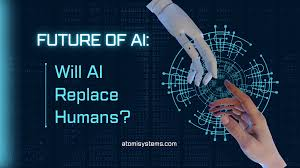
Artificial Intelligence (AI) is rapidly transforming education, offering tools for personalized learning, automated grading, virtual tutoring, and predictive analytics. While these advancements are impressive, the idea of AI replacing human educators raises serious concerns. Education is not just about knowledge transfer; it is a deeply human experience involving empathy, mentorship, creativity, and social interaction. Over-reliance on AI could compromise these essential elements. Understanding the potential risks is critical as schools and universities increasingly integrate AI into teaching and learning processes.
1. Loss of Human Interaction and Emotional Support
One of the most significant risks of AI replacing educators is the loss of human interaction. Teachers provide emotional support, encouragement, and mentorship that AI cannot replicate. Students often rely on educators for guidance, motivation, and confidence building—especially during challenging subjects or personal struggles.
AI can deliver information, track performance, and provide automated feedback, but it lacks empathy. Without human educators, students may feel isolated, disengaged, or unsupported. The classroom experience goes beyond academics; it is a place for emotional development, social learning, and the cultivation of soft skills. AI alone cannot fulfill these roles.
2. Over-Reliance on Algorithms and Data
AI-driven systems rely on algorithms and historical data to make decisions. While they can analyze trends and predict outcomes, these systems are inherently limited by the data they are trained on. Biases in historical educational data can perpetuate inequality, favor certain learning styles, or underestimate student potential.
Replacing human educators with AI could lead to over-reliance on these systems, reducing critical thinking and intuition in teaching. Educators can adjust lessons based on classroom dynamics, student emotions, and spontaneous questions—factors that AI may misinterpret or overlook.
3. Risk of Dehumanizing Education
Education is not only about acquiring knowledge but also about personal growth, values, and creativity. Human teachers inspire curiosity, foster critical thinking, and encourage students to explore ideas beyond the curriculum.
AI-driven instruction risks turning education into a transactional process: students receive content, complete assessments, and progress based on algorithms. The richness of discussion, debate, mentorship, and creative exploration could be diminished, potentially producing learners who are skilled in information recall but less capable of independent thought and innovation.
4. Limited Ability to Handle Complex Classroom Dynamics
Classrooms are complex social environments. Teachers manage diverse personalities, address conflicts, and adapt to unexpected situations. AI can respond to pre-programmed scenarios and data trends, but it cannot navigate the nuanced dynamics of a real classroom.
For example, a student struggling due to personal or family issues may require understanding, flexibility, and reassurance. AI systems lack the capacity for judgment and empathy, making it difficult to respond appropriately in these situations. Replacing educators with AI could compromise the quality of support students receive in these critical moments.
5. Potential Job Displacement and Economic Impact
Replacing human educators with AI could lead to significant job displacement. Teaching is not just a profession; it is a livelihood for millions worldwide. Widespread adoption of AI in education may reduce the need for teachers, administrative staff, and support personnel, raising economic and social concerns.
Moreover, the cost of developing, implementing, and maintaining AI systems is high. Schools in less affluent regions may not have equal access to AI tools, widening the educational gap between different socioeconomic groups.
6. Ethical and Privacy Concerns
AI in education relies on collecting vast amounts of student data, including grades, learning behaviors, engagement patterns, and even biometric or psychological information. Replacing human educators with AI increases reliance on data-driven decisions, raising privacy and ethical concerns.
Students may feel surveilled, and sensitive information could be misused or exposed in data breaches. Human educators provide a layer of ethical judgment and discretion that AI systems currently cannot replicate.
7. Challenges in Cultivating Creativity and Critical Thinking
AI excels at structured tasks, pattern recognition, and providing information, but fostering creativity and critical thinking requires human guidance. Teachers encourage students to question assumptions, debate ideas, and develop original thought.
AI-driven education may focus heavily on measurable outcomes, such as grades or standardized test performance, neglecting skills that are harder to quantify but equally important in life and work. This could produce technically competent students but limit their innovation, problem-solving abilities, and adaptability.
8. Dependence on Technology and Technical Failures
Relying solely on AI creates vulnerability to technical failures, software glitches, or cybersecurity threats. System outages or errors could disrupt learning for entire classes, whereas human educators can adapt, improvise, and maintain continuity. Technology cannot fully replace the adaptability and resilience of a human teacher in unforeseen situations.
9. Future Prospects and Balance
While AI offers incredible potential to enhance education, it should be seen as a complement rather than a replacement for human educators. The future likely involves a hybrid model, where AI handles repetitive tasks, data analysis, and personalized learning suggestions, while human teachers focus on mentorship, creativity, and social-emotional development.
Schools and policymakers must carefully balance automation with human expertise, ensuring that technology supports teaching without eroding the core human elements of education.
Conclusion
Artificial Intelligence can significantly improve efficiency, personalization, and access in education, but replacing human educators carries substantial risks. Loss of emotional support, over-reliance on algorithms, dehumanized learning experiences, job displacement, ethical concerns, and limitations in fostering creativity are serious considerations. Education is fundamentally a human endeavor, involving mentorship, guidance, and social interaction. AI should serve as a powerful tool to enhance teaching, not replace the human touch that shapes learners’ intellectual and emotional growth. By combining AI capabilities with skilled educators, schools can harness technology’s benefits while preserving the essential human essence of education.
Leave a Reply