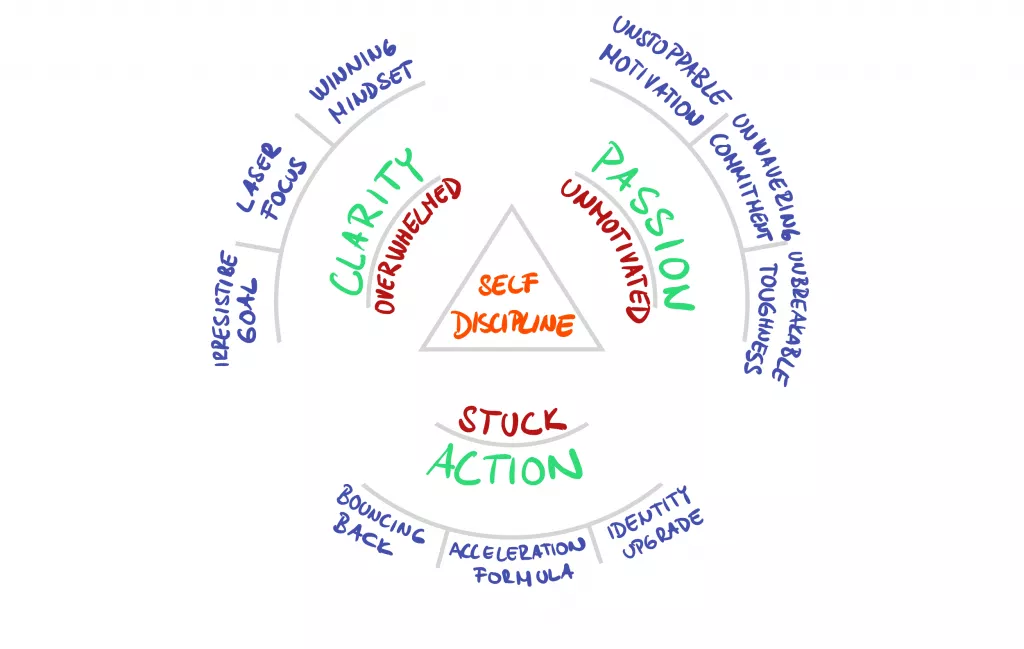
You know, I used to believe motivation was the secret sauce for success. Those energetic bursts when you feel unstoppable — that’s what I thought made people achieve things. But the truth hit me hard one morning when I woke up, stared at my to-do list, and just didn’t feel like doing anything. My motivation was gone, like a friend who suddenly stopped answering texts. And that’s when I realized — if I kept depending on motivation alone, I’d never get anywhere.
What really keeps you going isn’t motivation. It’s self-discipline.
It took me years to really understand that. I always thought discipline was something strict or robotic — like waking up at 5 a.m. and drinking green smoothies (which I still can’t stand, by the way). But discipline, I’ve learned, is actually more like a quiet agreement you make with yourself. A promise that says, “I’ll do what needs to be done, even when I don’t feel like it.”
And funny enough, once you get that part right, motivation starts to show up more often — not the other way around.
The Misleading Nature of Motivation
Motivation is great, don’t get me wrong. It’s that spark that makes you start a new workout, launch a side project, or clean your messy room. But the problem is — it fades. Always. It’s like sugar — gives you a rush, then drops you flat.
When we rely on motivation alone, we live in cycles of extremes. You feel excited for a week, maybe two. Then one bad day hits, and suddenly everything feels pointless. That’s where self-discipline quietly saves you. It’s the steady, boring, reliable engine that keeps the car moving when motivation’s gas tank runs empty.
For me, the shift began when I stopped asking, “Do I feel like doing this today?” and started asking, “What would the disciplined version of me do right now?”
Building Self-Discipline (Even When You Don’t Have Any)
Let me be honest — self-discipline doesn’t come naturally to most of us. I wasn’t born with it. I had to build it, brick by brick, through little daily choices that honestly felt insignificant at first.
Here’s how I started — and how you can too.
1. Start Ridiculously Small
When I first tried to “get disciplined,” I made the classic mistake of overloading myself. I set ten new habits at once: waking up early, working out, journaling, reading… and within a week, I’d quit all of them.
The truth is, your brain hates change. It fights it like a toddler resisting bedtime. So start tiny.
Like, “I’ll do five pushups,” or “I’ll write for five minutes.” It sounds stupidly small, but that’s the point. You want to build consistency, not perfection.
And what happens is, once you start — even small — momentum builds naturally. One small win leads to another.
2. Set Clear, Boring Routines
People underestimate how powerful routine is. When your brain knows what comes next, it stops negotiating.
I used to waste so much time debating with myself — “Should I work now or after lunch?” — until I made a strict schedule. I told myself, “I start writing at 9 a.m., no questions asked.”
It’s funny — once something becomes part of your identity, like brushing your teeth, it stops feeling like effort. That’s the real magic of discipline: you don’t think about it anymore. You just do it.
3. Be Kind to Yourself When You Mess Up
Here’s a big one. You’re going to mess up. You’ll miss workouts. You’ll procrastinate. You’ll scroll social media instead of doing what matters.
And that’s okay. Seriously.
The worst thing you can do is beat yourself up. Discipline isn’t about perfection — it’s about returning to the path faster each time you fall off. I used to quit entire habits after one bad day because I thought I’d “failed.” Now I just tell myself, “Alright, that was a rough day. Tomorrow we’re back.”
That small shift — from guilt to grace — changed everything for me.
4. Tie Discipline to Something Deeper
If you’re only disciplined because you “should be,” it won’t last. You need a why that’s emotional.
For me, it was realizing I didn’t want to live my life half-asleep. I didn’t want to keep breaking promises to myself. I wanted to become the kind of person who could trust his own word.
That’s what discipline really builds — self-respect. And once you have that, motivation becomes a side effect.
How Self-Discipline Creates Real Motivation
Something strange happens when you stay disciplined long enough. At first, it’s hard. Every task feels heavy. But after a few weeks of showing up — even imperfectly — you start noticing small wins.
You feel proud. You start trusting yourself more.
And that feeling — that quiet confidence — that’s motivation.
See, motivation doesn’t come from pep talks or YouTube videos. It comes from evidence. Every time you keep a promise to yourself, your brain says, “Hey, maybe I can actually do this.”
That’s when motivation becomes internal — not just a fleeting emotion, but a belief system.
A Real-World Example
Let me give you something real.
A few years ago, I decided to get back into shape. I hadn’t worked out in ages, and the thought of going to the gym was terrifying. So I started small: 10 minutes a day at home. That’s it. No fancy equipment.
At first, I hated it. Every day felt like dragging myself through mud. But I told myself, “Just show up. Don’t think, just move.”
After two weeks, I noticed something weird — I wanted to do it. That spark of motivation had finally come back, but it only appeared after I’d built the discipline to show up without it.
That’s when it hit me: discipline builds motivation, not the other way around.
Final Thoughts
I think we all want that feeling of being motivated — that fire that makes life feel easy. But life isn’t always easy. Some days, you’ll wake up tired, uninspired, and lost. And that’s okay.
Because discipline is what carries you through those days. It’s not glamorous. It’s not exciting. But it’s what separates the dreamers from the doers.
So if you’re trying to build motivation right now, maybe stop chasing the feeling. Instead, focus on showing up — just a little — every single day.
The more you honor your own word, the more motivation will find its way back to you.
And when it does, you’ll realize — it was never gone. It was waiting for you to prove you were serious.
Leave a Reply