There’s something uniquely satisfying about being a self-learner. You decide what to learn, when to learn it, and how fast to go. But if you’ve ever gone down a rabbit hole of YouTube tutorials or read through a dozen online courses, you know the struggle — keeping track of what you’ve learned. Notes scattered across Google Docs, phone screenshots, messy notebooks… It becomes chaos fast. That’s why having an effective note-taking system isn’t just helpful; it’s absolutely essential if you want your self-learning to actually stick.
Most people think note-taking is just about writing things down, but that’s barely scratching the surface. True note-taking is a form of thinking. When you take notes the right way, you’re not just recording information — you’re processing it, breaking it apart, and rebuilding it in your own words. That’s where the real learning happens.
Let’s dive into how you can build a system that works for you — something sustainable, organized, and powerful enough to actually make your brain remember.
1. Start With Why You’re Learning
Before you even start taking notes, ask yourself: why am I learning this?
That might sound obvious, but most of us skip it. We open a video, start writing random facts, and call it a day. But your note-taking system should reflect your purpose.
If you’re learning coding to build an app, your notes will look completely different from someone learning history just for fun. When you have a clear “why,” it becomes easier to filter what’s important and what’s just noise. Write your learning goal at the top of your first note — even if it’s short, something like:
“Goal: Learn Python well enough to automate simple daily tasks.”
That one line changes how your brain organizes everything that comes next.
2. Pick a Note-Taking Method That Matches Your Brain
There’s no one “best” note-taking method — just the one that works for you. Here are a few tried-and-tested systems self-learners love:
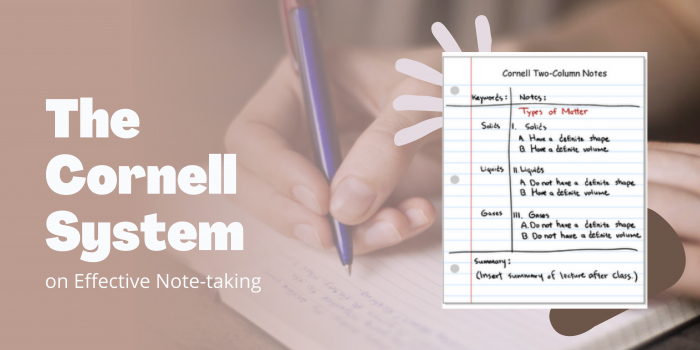
The Cornell Method:
Divide your page into three sections — cues on the left, notes in the middle, and a summary at the bottom. While learning, jot notes in the main area. Afterward, fill in key questions or prompts on the left and summarize at the bottom. It forces you to process the information twice, which boosts memory retention.
The Zettelkasten System:
This one’s a favorite among researchers and writers. Each note (or “zettel”) contains a single idea. Notes are linked to one another using tags or references, forming a kind of knowledge web. The beauty of this system is that ideas connect naturally over time — one note sparks another, and soon you’ve built your own little Wikipedia in your head.
The Mind-Mapping Method:
Perfect for visual thinkers. You start with a main idea in the center and branch out into related topics, examples, or concepts. It’s great for understanding relationships between ideas rather than memorizing facts.
Try all three. You’ll notice one will just feel right. Stick with that.
3. Go Digital — But Stay Intentional
Most self-learners today use digital tools, and that’s perfectly fine — as long as you don’t fall into the “endless app switching” trap. Don’t waste time hopping from Notion to Obsidian to Google Keep to Evernote and back again. Pick one or two tools that suit your workflow and master them.
Some favorites:
- Notion: highly customizable, great for structured learning dashboards.
- Obsidian: ideal for Zettelkasten-style linked thinking.
- Roam Research: perfect for people who love web-like note connections.
- Google Docs / OneNote: simple, easy, and widely accessible.
If you prefer handwritten notes, that’s fine too — just make sure you digitize important ones later (using tools like Google Lens or Evernote Scan) so you can organize and search them easily.
A little tip — use consistent formatting. Bold main ideas, use bullet points for lists, and highlight definitions. Your future self will thank you.
4. Don’t Copy — Rephrase
One of the biggest mistakes self-learners make is copying text word-for-word. It feels productive but isn’t. When you copy, you’re just acting as a human photocopier. When you rephrase, you engage your brain in active learning.
After reading or watching something, close your eyes for a few seconds and summarize it in your own words. Write that summary down. If you can’t explain it simply, you don’t really understand it yet. That’s the “Feynman Technique,” and it works wonders for comprehension.
It’s messy at first, sure. Your notes will look like scribbles. But those scribbles are real learning in progress.
5. Create a Personal Knowledge Base
Think of your notes not as individual pages, but as a growing network of ideas.
This is where tools like Obsidian and Notion shine. Instead of keeping separate notes for every topic, start linking related ideas.
For example:
If you’re learning about “Machine Learning,” and you take a note on “Neural Networks,” link that to your “Data Science” note. That way, every time you revisit one, you’ll see its connection to the others — and that’s how deep understanding builds.
Over time, this becomes your second brain — a living library of everything you’ve ever learned, organized in a way that makes sense to you.
6. Review Regularly — Spaced Repetition
Notes are useless if you never look at them again.
The human brain forgets things shockingly fast — within days, even hours. That’s why spaced repetition is so powerful. It means reviewing your notes at increasing intervals: one day later, three days later, a week later, and so on. Each time you review, you strengthen the memory pathway.
Apps like Anki or RemNote automate this process beautifully, turning key points from your notes into flashcards that resurface right when you’re about to forget them.
Even if you don’t use an app, make a habit of weekly and monthly reviews. Pick a quiet time, skim through your notes, and highlight what still feels fuzzy.
7. Make It Personal
Your notes are for you, not for anyone else. Don’t worry about them looking perfect. Add your thoughts, questions, jokes, even mistakes. That’s what makes them memorable. You can even include examples from your life — something that ties abstract concepts to real experiences.
For instance, if you’re learning marketing psychology, and you notice how a YouTube thumbnail grabbed your attention, jot that example down. The more personal the connection, the more it sticks.
8. Turn Notes Into Action
Knowledge that sits still isn’t knowledge — it’s storage.
Each time you learn something new, ask yourself: How can I use this?
Turn your notes into small action steps. If you learned a new coding concept, apply it in a mini-project. If you studied a self-help concept, test it in real life for a week.
Taking action transforms passive knowledge into active skill. And as you do, update your notes with your reflections — what worked, what didn’t. This feedback loop is where self-learning truly becomes self-mastery.
9. Keep It Simple and Sustainable
The most effective system is the one you’ll actually use. Don’t overcomplicate it with color-coding rules, dozens of tags, or perfect layouts. Start small: one folder, one template, one review routine. You can always evolve it later.
The goal isn’t to make pretty notes — it’s to make useful ones.
10. Remember: Notes Are Thinking Tools
In the end, your note-taking system is just a reflection of how you think. It’s not about hoarding information; it’s about shaping ideas and understanding. Whether you use pen and paper or a sleek app, whether your notes look neat or chaotic — if they help you think better, they’re doing their job.
Leave a Reply