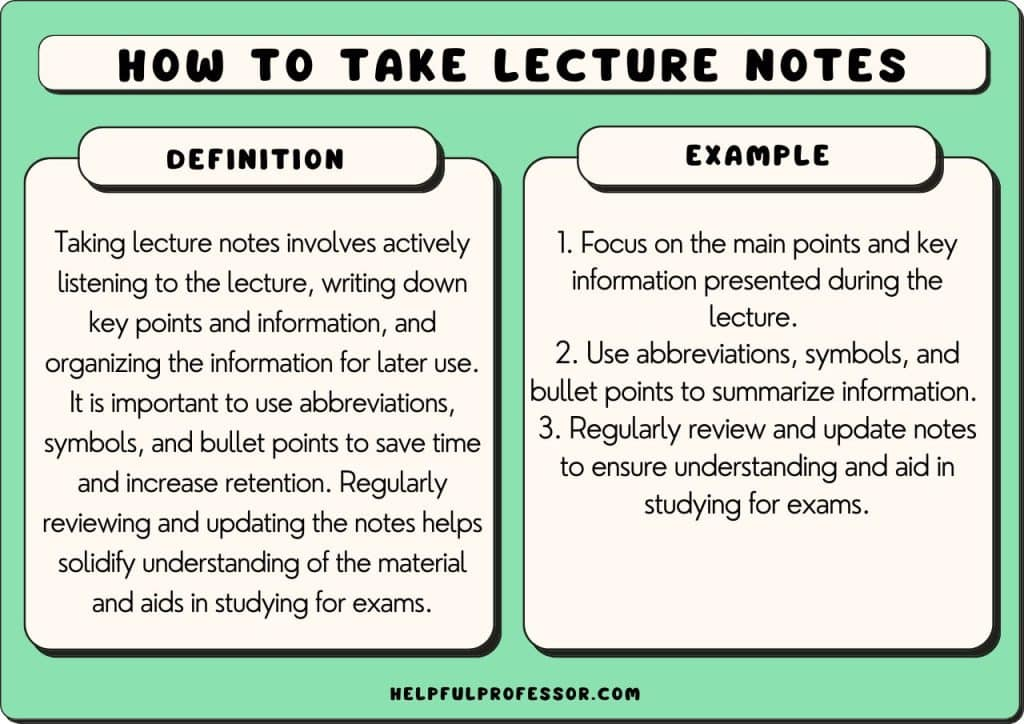
Sitting through lectures can feel overwhelming, especially when professors talk fast. Notes aren’t just a record — they’re tools to help you understand and remember information.
Prepare Before Class
Skim the textbook or slides before class. Knowing the topic in advance helps you pick out key points and understand the lecture better.
Use a Method That Works for You
- Cornell Method: Divide the page into sections for notes, keywords, and summary.
- Outline Method: Use bullet points to show hierarchy and relationships.
- Mind Mapping: Visual learners can connect concepts through diagrams.
Focus on Understanding, Not Writing Everything
Don’t try to transcribe word-for-word. Listen actively, capture main ideas, examples, and definitions. Your brain remembers better when you process information, not just copy it.
Highlight Key Points
Use symbols like stars or underlines for important concepts. Later, these markings help you review quickly.
Review and Revise Soon
Within 24 hours, revisit your notes. Fill gaps, clarify confusing points, and summarize. This strengthens memory and prevents last-minute panic before exams.
Final Thought
Effective note-taking is a skill, not a natural talent. Experiment with methods, stay engaged, and treat your notes as a living study guide — something you actively use, not just store.
Leave a Reply