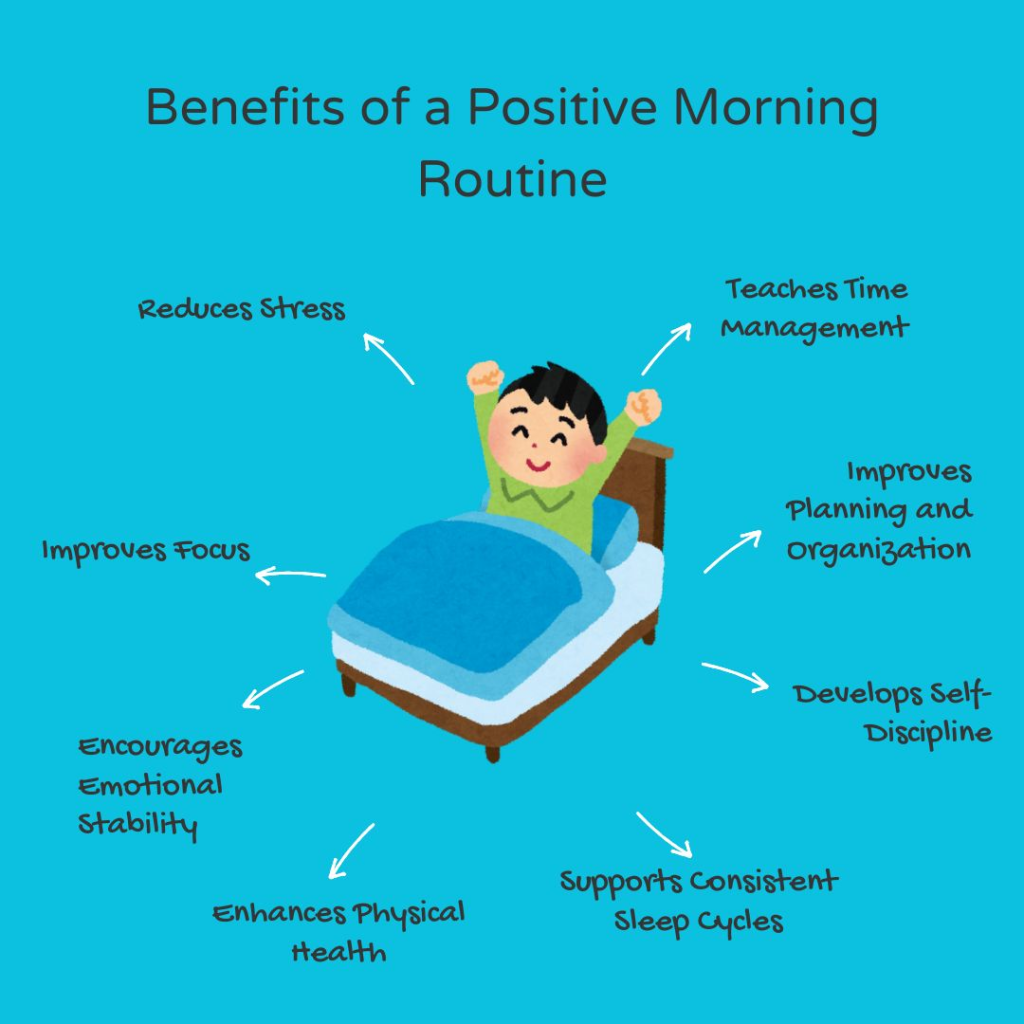
Let’s be honest. Mornings can feel… heavy.
That blurry moment when the alarm goes off and your brain argues with itself — “five more minutes” — it’s familiar. But here’s the truth: how you spend those first few minutes after waking up can quietly build (or break) your motivation for the entire day.
Many people think motivation just appears. Like some spark that lights up out of nowhere. But research — and a lot of real-world experience — says otherwise. Motivation isn’t something you find. It’s something you build, and morning routines are one of the most powerful tools to do it.
1. Why Morning Routines Actually Matter
Let’s start with something simple: your brain craves structure.
When you wake up at the same time, perform the same set of actions — stretching, journaling, sipping your coffee — you’re training your mind to expect progress. It’s like setting up small dominoes that eventually lead to bigger wins.
According to behavioral psychologist BJ Fogg, tiny habits stacked together can create lasting behavior change. In the morning, this means the smallest actions — making your bed, opening the curtains, even drinking a glass of water — trigger a sense of accomplishment. That little “win” gives your brain dopamine. And dopamine? That’s motivation fuel.
2. Morning Routines Reduce Decision Fatigue
You know that mental fog when you can’t decide what to wear, what to eat, or what to do first? That’s called decision fatigue, and it drains motivation fast.
When your morning has a rhythm, you’re not wasting energy on tiny decisions. You’re preserving willpower for things that actually matter. Think of it this way — if you spend the first hour of your day wrestling with your own thoughts, by noon, your motivation tank is half empty.
People like Steve Jobs and Barack Obama famously wore similar clothes every day. It wasn’t laziness — it was strategy. They eliminated minor choices to focus their energy on what moved them forward.
3. Building Momentum Before You Touch Your Phone
This might sting a bit — but the fastest way to kill your motivation is to check your phone first thing in the morning.
The moment you dive into notifications, you’re letting other people’s priorities set your tone. Messages, social media, news — they hijack your mental focus before you’ve even had coffee.
Try something different. Leave your phone facedown for the first 30 minutes. Use that time to connect with yourself instead of the digital noise. A short walk, quiet breathing, writing a few lines of gratitude — it doesn’t need to be fancy. What matters is that you take control of your attention before the world grabs it from you.
4. Movement Wakes Up More Than Your Muscles
Exercise in the morning isn’t about burning calories. It’s about creating energy.
Studies from Harvard and Stanford both show that even ten minutes of light movement — stretching, yoga, or a brisk walk — can boost alertness, improve focus, and elevate mood. Basically, it tells your brain: “We’re awake, and we’re doing something.”
It doesn’t have to be intense. You don’t need to run five miles before sunrise. Just move. Even rolling your shoulders, standing tall, breathing deeply — these micro-actions reset your nervous system. Motivation flows more easily when your body feels alive.
5. The Power of Intentional Reflection
A lot of people underestimate journaling, but it’s secretly one of the most effective motivation tools you can have.
Spend five minutes writing down three things:
- What you’re grateful for
- What you want to accomplish today
- Why it matters
This last part — the why — is everything. Motivation fades when we lose connection to purpose. By reminding yourself every morning why you’re doing what you’re doing, you reconnect to that inner drive.
And if journaling sounds too much like homework, no problem. You can even just think it through while sipping coffee. The goal isn’t perfection; it’s awareness.
6. Morning Routines as Identity Builders
Here’s something that most people miss: routines aren’t just about actions — they shape identity.
Every time you follow through with your morning habits, you’re proving to yourself that you’re the kind of person who shows up. Over time, that identity becomes self-reinforcing. You don’t just do productive things — you become a productive person.
Motivation that’s built on identity lasts longer than motivation built on hype. It’s quiet, steady, reliable. Like a muscle you’ve trained over time.
7. When It Doesn’t Go Perfectly — That’s Okay
Let’s get real. Some mornings just don’t go to plan. You oversleep, spill coffee, skip the workout. And that’s fine. Motivation isn’t about being perfect — it’s about coming back.
The key is flexibility. If your routine feels like a prison, it’s not working for you. A strong morning routine should support your life, not control it. Adjust it when needed. The point is consistency, not rigidity.
8. Putting It All Together
Here’s a simple example of a morning routine that builds motivation:
- Wake up and drink water (signal to your brain: the day begins).
- Open curtains or step outside (natural light = instant alertness).
- Do 5–10 minutes of movement.
- Write 3 short notes in a journal (gratitude, goals, purpose).
- Have breakfast or coffee without your phone.
- Review one key goal for the day.
That’s it. 20–30 minutes total. But the ripple effect is huge.
Final Thoughts
Motivation isn’t something you chase; it’s something you prepare for.
Your morning routine is like the ignition key to your mindset. When you craft those early hours with intention — even in small ways — you’re setting the tone for how you’ll face challenges, decisions, and distractions throughout the day.
And remember, it’s not about becoming some ultra-optimized version of yourself overnight. It’s about building tiny rituals that remind you, “I’m capable. I’m in control. I’m moving forward.”
That’s what real motivation feels like — quiet, steady, and earned one morning at a time.
Leave a Reply