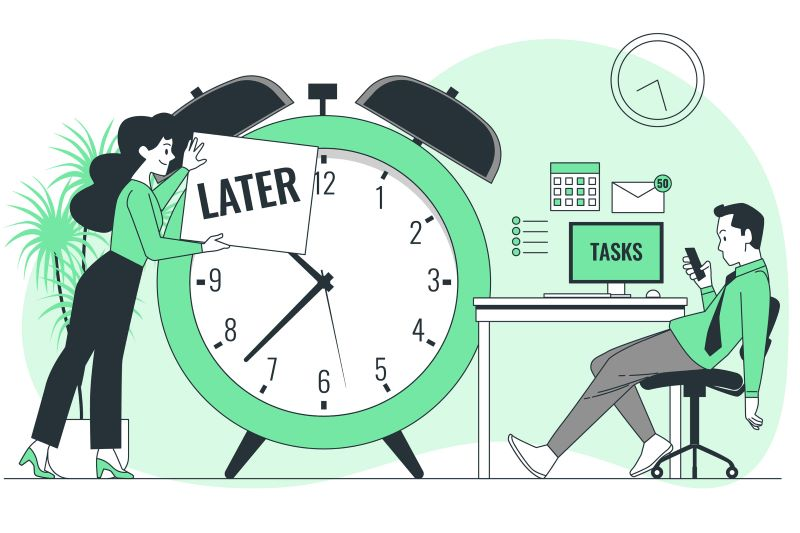
Let’s be honest.
We’ve all been there. Sitting in front of a screen, knowing exactly what needs to be done… and somehow, doing everything else instead. Checking emails. Watching “just one” YouTube video. Suddenly cleaning the kitchen like our life depends on it.
It’s not that we’re lazy. That’s the biggest misconception about procrastination. The truth is, procrastination is rarely about time management. It’s about mindset — how we think, how we feel, and how we react to discomfort.
Let’s dig into the real reason behind procrastination and, more importantly, how a few key mindset shifts can help you finally get unstuck.
1. Understand What Procrastination Really Is
Here’s the first shift: stop calling yourself lazy.
Procrastination is a form of emotional avoidance. It’s your brain’s way of dodging uncomfortable feelings — fear of failure, perfectionism, self-doubt, or even boredom.
According to Dr. Tim Pychyl, a psychology professor at Carleton University, procrastination isn’t a time problem; it’s an emotion regulation problem.
When a task feels unpleasant or overwhelming, your brain chooses a short-term mood boost (like scrolling social media) over the long-term reward of finishing the task.
So next time you catch yourself putting something off, pause. Ask:
“What am I actually trying to avoid feeling right now?”
Naming the emotion is the first step toward managing it.
2. Shift from “I Have to” → “I Choose to”
This sounds small, but it’s huge.
When you say “I have to write that report,” your brain immediately associates it with pressure and resistance. It feels forced, like someone’s controlling you.
But when you say “I choose to write that report,” you reclaim control. It becomes an act of agency, not obligation.
Psychologists call this the autonomy shift — when you recognize that nearly everything you do is a choice, even the unpleasant stuff. You don’t have to work out, you choose to because it supports your health and confidence.
This tiny linguistic tweak makes your mind more cooperative. You move from resentment to responsibility.
3. Embrace the “Progress Over Perfection” Mindset
Perfectionism is one of procrastination’s sneakiest partners.
You wait until you “feel ready,” or until the plan is flawless — which, of course, never happens.
Try flipping your mindset: instead of aiming for perfect, aim for progress.
One messy paragraph. One slide finished. One call made. That’s it.
It’s what psychologists call the growth mindset — a term coined by Dr. Carol Dweck from Stanford University. It’s about seeing effort as part of learning, not proof of inadequacy.
When you celebrate small wins, your brain releases dopamine, reinforcing productive behavior. It’s not magic. It’s biology.
4. Reframe Fear as a Signal, Not a Stop Sign
A lot of procrastination hides under fear — fear of not being good enough, of failing, or of judgment. But fear, if you listen carefully, is usually pointing toward something that matters.
That presentation you keep delaying? Probably important. That business idea you can’t stop thinking about? Probably meaningful.
So instead of saying, “I’m scared, so I’ll wait,” try “I’m scared, so I’ll begin small.”
Courage isn’t the absence of fear. It’s action despite it.
Remember: fear and excitement feel almost identical in the body. Same adrenaline, same heart rate. The only difference is how you label it.
5. Build a “Micro-Commitment” Habit
Big goals often feel paralyzing. Writing a book, starting a side business, finishing a degree — your brain sees these as too massive to handle.
The trick is to shrink the task until it’s too easy to resist.
Instead of “I’ll write a chapter,” tell yourself, “I’ll write for 10 minutes.”
Ten minutes. That’s all. No pressure, no grand plan. Once you start, you’ll often keep going because momentum kicks in. Psychologists call this the Zeigarnik effect — once you start a task, your brain wants to finish it.
The hardest part is not doing the work. It’s starting it.
6. Learn to Work With Your Energy, Not Against It
Here’s something most productivity books skip: you can’t force motivation.
It’s cyclical, like energy levels throughout the day. Some people are morning thinkers, others come alive at night.
Notice your natural rhythm. When do you feel sharpest? When do you zone out?
Use that awareness to design your day. Don’t schedule deep work when you’re mentally drained — you’ll only feed the cycle of guilt and avoidance.
A flexible, self-aware schedule beats a rigid one every time.
7. Be Kind to Yourself
This one’s easy to say, hard to practice.
When you procrastinate, your inner critic often shows up fast — calling you lazy, stupid, or weak. But that shame only deepens avoidance.
A better approach? Self-compassion.
Kristin Neff, a leading researcher on self-compassion, found that people who treat themselves kindly after setbacks are more likely to recover motivation and complete their tasks.
It’s not self-pity. It’s emotional resilience.
Next time you slip, instead of saying “I’m hopeless,” say, “Okay, I slipped today. Tomorrow’s another try.”
Because it is. Always is.
Final Thoughts
Procrastination isn’t a character flaw. It’s a signal — that something inside you needs attention, not punishment.
When you shift your mindset from resistance to understanding, from fear to curiosity, things change quietly but powerfully. You stop fighting yourself. You start working with yourself.
And little by little, task by task, that stuck feeling starts to fade.
Because you don’t have to be perfect. You just have to begin.
Leave a Reply