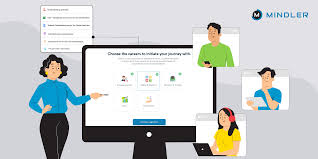
Career guidance has always been an essential part of education, helping students make informed decisions about their future studies, jobs, and personal development. Traditionally, career counseling relied on face-to-face meetings, standardized tests, and personal interviews. However, these methods often have limitations—they are time-consuming, subjective, and sometimes fail to address the unique needs of each student. Artificial Intelligence (AI) is now transforming career guidance, providing personalized, data-driven, and scalable solutions that can significantly enhance students’ decision-making process.
1. Personalized Career Recommendations
One of the most significant applications of AI in career guidance is personalized recommendations. AI systems analyze a student’s academic performance, skills, interests, and extracurricular activities to suggest suitable career paths.
For instance, a student excelling in mathematics and problem-solving might be guided towards engineering or data science careers, while another with strong communication and creative skills could explore journalism, marketing, or design. By leveraging machine learning algorithms, AI can identify patterns and correlations that might not be obvious to human counselors, offering students a more precise and tailored set of career options.
2. Skill Gap Analysis and Development
AI tools can also assess a student’s current skill set and identify gaps required for specific career paths. For example, if a student aims to become a software developer but lacks proficiency in certain programming languages, the AI system can highlight these gaps and suggest targeted online courses, workshops, or practice exercises.
This approach helps students plan their learning journey more effectively. Instead of blindly following a career path, they receive actionable insights on what skills to acquire, improving their chances of success in competitive job markets.
3. Intelligent Career Assessment Tests
Traditional career assessments, while useful, often rely on self-reported data and standardized scoring, which may not accurately reflect a student’s potential. AI-based assessment tools use advanced data analytics to interpret multiple factors simultaneously.
For example, these tools can evaluate a student’s performance across academic subjects, problem-solving tasks, personality traits, and online learning behaviors. AI can combine these insights to provide more nuanced recommendations, helping students discover careers that align not only with their abilities but also with their interests and long-term goals.
4. Real-Time Labor Market Insights
AI applications in career guidance are not limited to student profiling—they can also analyze labor market trends. By scanning job portals, industry reports, and employment data, AI can provide students with up-to-date information about demand, salary expectations, and growth potential in various fields.
For instance, a student considering a career in artificial intelligence can receive insights about the most in-demand AI skills, top employers, and emerging areas like natural language processing or robotics. This real-time information helps students make informed decisions based on both personal fit and market relevance.
5. Virtual Career Counselors and Chatbots
AI-powered virtual counselors and chatbots are revolutionizing the accessibility of career guidance. Students can interact with these systems anytime, asking questions about courses, career options, internships, or application procedures.
These chatbots use natural language processing (NLP) to understand queries and provide context-aware responses. Unlike traditional counselors, AI virtual assistants are available 24/7 and can handle large volumes of students simultaneously, ensuring no one is left without guidance due to time or resource constraints.
6. Supporting Diverse Student Needs
AI applications are particularly beneficial for supporting diverse student populations. Students with learning disabilities, those in remote areas, or non-native speakers can receive personalized guidance tailored to their specific circumstances.
For example, AI platforms can provide multilingual career counseling, adjust content presentation for accessibility, and suggest flexible learning pathways to accommodate students with different learning speeds. This inclusivity ensures that all learners have equal opportunities to explore and plan their careers effectively.
7. Monitoring Progress and Providing Feedback
AI systems don’t stop at career suggestions—they can track student progress over time. By continuously monitoring academic performance, skill acquisition, and participation in extracurricular activities, AI tools provide dynamic feedback and update career recommendations as students grow.
For example, if a student develops new coding skills or gains leadership experience, the AI system can adjust suggested career paths, introduce new opportunities, or recommend advanced courses. This dynamic approach ensures that guidance evolves with the student’s development, making career planning an ongoing, adaptive process.
8. Challenges and Considerations
While AI offers immense potential in career guidance, there are challenges. Privacy and data security are crucial, as these systems rely on sensitive student information. Additionally, AI recommendations should not replace human judgment entirely—personal mentorship, ethical considerations, and emotional support remain essential components of career guidance.
Another concern is algorithmic bias. AI systems trained on historical data may unintentionally favor certain careers or demographics, so institutions must ensure transparency and fairness in AI-driven recommendations.
9. Future Prospects
The future of AI in career guidance is promising. Integration with augmented reality (AR) or virtual reality (VR) could allow students to “experience” careers before choosing a path, simulating real workplace environments. Predictive analytics may anticipate future industry demands, helping students prepare proactively for emerging roles.
Furthermore, AI could facilitate global career exploration, connecting students with mentors, internships, and job opportunities worldwide, while providing personalized guidance tailored to local contexts and individual preferences.
Conclusion
Artificial intelligence is redefining career guidance in education by offering personalized, data-driven, and scalable solutions. From personalized career recommendations and skill gap analysis to intelligent assessments, virtual counselors, and labor market insights, AI enhances students’ ability to make informed decisions about their futures. While challenges like privacy, bias, and the need for human oversight remain, the benefits are transformative. AI does not replace human counselors; instead, it complements their work, making career guidance more accessible, effective, and adaptive. In today’s rapidly changing world, AI is a powerful ally, empowering students to navigate their educational and professional journeys with confidence and clarity.
Leave a Reply