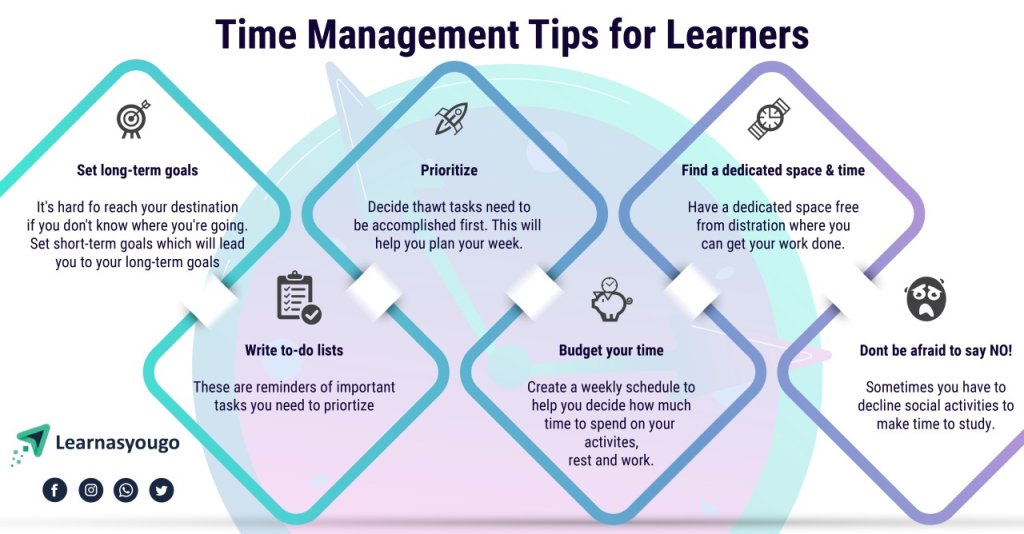
It’s exciting to want to learn everything. One moment you’re deep into digital marketing, the next you’re watching coding tutorials, and before you know it, you’re curious about psychology or finance. The world has so much knowledge to offer, and learning multiple topics at once feels like unlocking different parts of your brain. But the truth? It’s not easy to manage your time when you’re juggling different areas of study. Without structure, you’ll end up halfway through ten things instead of mastering two.
Still, it’s completely possible to balance it all — if you approach it with strategy, discipline, and a bit of self-awareness.
Let’s break it down step-by-step, in a realistic way.
1. Understand Why You’re Learning Each Topic
Before you even touch a schedule or a time planner, ask yourself this simple question: Why am I learning this?
When you study multiple things at once, not every topic needs the same amount of attention or energy. Some things are career-focused (like learning data analysis), others might be curiosity-based (say, photography or a new language). The “why” behind your learning helps you prioritize.
For example, if your goal is to switch careers into web development, that subject deserves daily focus, while something like learning guitar could be 2–3 times a week. The moment you understand purpose, you stop spreading yourself too thin.
2. Break Your Week Into Learning Blocks
The biggest mistake people make is trying to study everything every day. That’s a fast way to burn out and remember… almost nothing.
Instead, divide your week into focus blocks. For instance:
- Monday & Tuesday: Core topic (e.g., coding)
- Wednesday: Complementary topic (like UX design or digital tools)
- Thursday: Reading or general learning
- Friday: Creative subject (e.g., writing, drawing, etc.)
- Weekend: Review or light exploration
This system works because your brain loves consistency. You’re training it to expect certain subjects on certain days, which makes switching easier and less mentally exhausting.
Also, always include buffer time. Life happens — meetings, mood swings, low energy days. Don’t pack your schedule to the last minute.
3. Use the “One-Topic-Per-Session” Rule
Multitasking feels productive but it kills actual progress. You might think you can watch a programming tutorial while reading marketing blogs, but your brain isn’t built for that.
Instead, create focused sessions. Spend 45–90 minutes on one single topic, then take a short break before moving to the next one. During that session, remove distractions — phone off, no social media tabs open, no switching.
You’ll be surprised how much deeper you learn when you stop jumping between topics mid-session.
4. Create a Tracking System (But Keep It Simple)
You don’t need a fancy Notion dashboard or a complicated productivity app — though you can use them if you enjoy it. What matters is having a way to track progress.
A simple Google Sheet, notebook, or even a whiteboard works fine. Just note:
- What topic you studied
- How long you studied it
- What specific concepts you covered
- What’s next
This not only helps you stay organized but also gives you a psychological boost when you see your progress growing week by week.
5. Mix Learning Styles
One common trap is trying to study everything in the same way — reading, reading, reading. But when you’re handling multiple topics, variety helps you stay mentally fresh.
Try this:
- Watch videos for visual-heavy topics (like design or art).
- Read articles or books for theory-based learning (like economics or history).
- Practice hands-on for skill-based areas (like coding, writing, or speaking a new language).
Switching between styles keeps things interesting and prevents mental fatigue. It’s also proven that multi-sensory learning (visual + auditory + kinesthetic) improves long-term memory.
6. Set Micro-Goals for Each Subject
Big goals like “learn data analysis” or “master photography” are too vague. They drain motivation because progress feels invisible.
Instead, break everything down into micro-goals — tiny, trackable tasks that you can finish in a week.
Example:
- “Learn basic Excel formulas” instead of “learn Excel.”
- “Shoot and edit one 2-minute video” instead of “get better at video editing.”
Each completed micro-goal gives you a small win, and those add up. You’ll actually feel like you’re learning instead of endlessly chasing vague mastery.
7. Protect Your Focus Time (Non-Negotiable Hours)
When you’re studying several topics, the biggest enemy isn’t complexity — it’s distraction.
Social media, random YouTube recommendations, phone notifications — all can break your rhythm. The trick is to create non-negotiable study blocks every day or every few days. During these hours, nothing else gets your attention.
It could be 7–9 AM before work, or 9–11 PM if you’re a night owl. The time doesn’t matter — the consistency does. Treat these blocks as seriously as a meeting with your boss.
8. Learn How to Switch Context Smoothly
Switching between topics can create “mental lag.” You finish studying finance and jump straight into language learning — your brain feels scattered.
To fix that, give yourself short transition rituals. For example:
- Take a 10-minute walk
- Stretch, get water, breathe deeply
- Quickly review what you learned before switching
This helps reset your mind and improves focus for the next topic.
9. Don’t Study for Too Long
Here’s something most people get wrong: more hours ≠ more learning. Your brain retains information best in shorter, focused bursts.
The Pomodoro technique (25 minutes focus + 5 minutes break) or even 90-minute deep sessions work far better than marathon study days.
It’s better to do three 1-hour sessions across the day than one 6-hour block of cramming. When you rest, your brain consolidates memory — so taking breaks is actually part of learning, not avoiding it.
10. Reflect and Adjust Weekly
Every week, sit down for 15 minutes and ask yourself:
- What did I learn this week?
- Which topics took more time than I expected?
- Am I spreading myself too thin?
Adjust accordingly. Sometimes, you’ll realize one subject needs to pause while another deserves more attention — and that’s fine. Flexibility is key.
Learning multiple things isn’t about rigid discipline. It’s about rhythm — knowing when to push, when to pause, and when to switch gears.
11. Avoid Guilt and Comparison
This part matters a lot. You’ll see people online mastering skills faster, or finishing courses you barely started. That’s okay. Everyone’s pace is different. The point of learning multiple topics isn’t competition; it’s curiosity and personal growth.
Some weeks you’ll be super productive, others… not so much. The key is not to quit because of guilt. Consistency beats intensity every single time.
12. Stay Curious and Reward Yourself
When you’re managing multiple learning paths, burnout is always around the corner. Keep curiosity alive by connecting what you learn. Notice how coding teaches logic, which helps in problem-solving for business. Or how psychology improves your writing.
Reward yourself for finishing milestones — watch a movie, take a day off, or just appreciate your progress. Learning should feel fulfilling, not punishing.
Final Thoughts
Managing time while learning multiple topics is less about working harder and more about working smarter. Know your priorities, plan learning blocks, protect your focus, and allow rest. Remember — your brain isn’t a machine. It needs time to absorb, connect, and reflect.
Leave a Reply