Blog

  • Slot88: Complete Guide to Playing Online Slots and Hitting Big Jackpots

    Slot88: Complete Guide to Playing Online Slots and Hitting Big Jackpots

    Online slot gaming ne pichhle kuch saalon mein bohat zyada popularity hasil ki hai, aur Slot88 is field mein aik mashhoor aur trusted naam ban chuka hai. Yeh platform players ko exciting gameplay, attractive features, aur big jackpot jeetne ke real chances provide karta hai. Chahe aap beginner hon ya experienced player, Slot88 aap ke liye ek complete entertainment aur winning experience offer karta hai.

    Slot88 Ka Introduction

    Slot88 aik online slot gaming platform hai jo modern technology aur advanced gaming systems par kaam karta hai. Iska interface user-friendly hota hai, jisse naye players ko bhi games samajhne mein mushkil nahi hoti. Slot88 par mukhtalif themes, graphics, aur sound effects ke sath kai tarah ke slot games available hotay hain jo gameplay ko engaging aur enjoyable banate hain.

    Online Slots Kaise Kaam Karte Hain

    Slot88 ke tamam slot games Random Number Generator (RNG) system par based hotay hain. Is system ki wajah se har spin bilkul random aur fair hota hai. Iska matlab hai ke koi bhi player ya system results ko control nahi kar sakta. Har game ka apna paytable hota hai jisme symbols, winning combinations, aur payouts ki detail di hoti hai.

    Slot88 Par Account Banana Aur Shuru Karna

    Slot88 par khelna shuru karne ke liye sab se pehla step account banana hota hai. Registration process simple hota hai jisme basic information provide karni hoti hai. Account banane ke baad players apna balance manage kar sakte hain aur apni pasand ke games select kar sakte hain. Beginners ke liye yeh behtar hota hai ke pehle low-risk games se start karein taake system aur gameplay ko achi tarah samajh saken.

    Slot Games Ki Types

    Slot88 par mukhtalif types ke slot games available hotay hain, jaise:

    • Classic slots jo simple rules aur kam symbols ke sath hoti hain
    • Video slots jinmein advanced graphics aur bonus features hotay hain
    • Progressive jackpot slots jahan jackpot amount time ke sath barhta rehta hai

    Har type ka apna risk aur reward hota hai, is liye players ko apni strategy ke mutabiq game select karna chahiye.

    Bankroll Management Ki Ahmiyat

    Big jackpots jeetne ke liye sirf luck hi nahi, balkay sahi bankroll management bhi bohat zaroori hoti hai. Players ko chahiye ke:

    • Apna daily ya weekly budget set karein
    • Kabhi bhi apni limit se zyada bet na lagayein
    • Loss hone par over-betting se bachain

    Sahi bankroll management aap ko lambi gaming journey aur behtar control deta hai.

    Jackpot Jeetne Ke Chances Kaise Barhayein

    Agar aap Slot88 par big jackpot target karna chahte hain, to kuch smart steps follow karna zaroori hai. High RTP games choose karna, game ke rules ko samajhna, aur patience ke sath khelna aap ke chances ko improve karta hai. Progressive jackpot games mein consistent aur planned betting se achi winning possibilities hoti hain.

    Bonus Features Aur Free Spins

    Slot88 ke slot games mein aksar special features hotay hain jaise wild symbols, scatter symbols, free spins, aur multipliers. Yeh features winning ko bohat zyada enhance kar sakte hain. Players ko chahiye ke har game ke bonus features ko detail se samjhein kyun ke zyada tar big wins inhi features ke through milti hain.

    Responsible Gaming

    Slot88 par khelte waqt responsible gaming ka khayal rakhna bohat zaroori hai. Online slots sirf entertainment ke liye hoti hain, is liye apni limits ko hamesha yaad rakhein. Agar aap thakan ya frustration mehsoos karein, to break lena behtar hota hai. Responsible play aap ko financial aur mental stress se bachata hai.

    Common Mistakes Jin Se Bachna Chahiye

    Kai players kuch common mistakes karte hain jaise bina strategy ke betting, loss ke baad turant recover karne ki koshish, ya sirf luck par depend karna. In ghaltiyon se bach kar aap apna experience behtar aur zyada controlled bana sakte hain.

    Conclusion

    Slot88 online slots khelne walon ke liye aik complete aur exciting platform hai jahan entertainment ke sath winning ke real chances bhi maujood hain. Agar aap game rules ko samajh kar, sahi bankroll management ke sath, aur patience ke sath khelte hain, to big jackpots jeetna mumkin ho sakta hai. Slot88 par success ka raaz planning, discipline, aur responsible gaming mein chhupa hota hai.


  • Farmacias en Línea Legítimas en México: Una Alternativa Confiable y Segura

    Farmacias en Línea Legítimas en México: Una Alternativa Confiable y Segura

    Introducción: El Auge del Comercio Farmacéutico Digital

    En los últimos años,Mexican online pharmacy ha experimentado un crecimiento significativo en el comercio electrónico, y el sector farmacéutico no ha sido la excepción. Las farmacias en línea han ganado terreno entre los consumidores, quienes buscan comodidad, precios competitivos y, sobre todo, seguridad al adquirir medicamentos. Sin embargo, este auge también ha traído consigo la preocupación por la autenticidad de los productos y la legitimidad de los sitios web. En este contexto, identificar una farmacia mexicana legítima en línea se ha vuelto una prioridad tanto para autoridades sanitarias como para los usuarios.

    El Marco Legal y la Supervisión Sanitaria

    La Comisión Federal para la Protección contra Riesgos Sanitarios (COFEPRIS) es la entidad responsable de regular y supervisar la venta de medicamentos en México. Cualquier farmacia que opere en línea debe cumplir con los mismos requisitos que una farmacia física: contar con licencias de funcionamiento, un responsable sanitario y registros válidos de cada producto. Además, debe garantizar que los medicamentos se distribuyan bajo condiciones adecuadas de almacenamiento, transporte y conservación.

    Las farmacias digitales legítimas suelen mostrar en su sitio web su número de licencia sanitaria y datos de contacto verificables. Esto permite a los consumidores confirmar que están tratando con un negocio autorizado. COFEPRIS, por su parte, ofrece mecanismos para reportar irregularidades y verificar la autenticidad de establecimientos en su portal oficial.

    La Diferencia entre una Farmacia Legal y una Ilegal

    El principal riesgo del comercio electrónico farmacéutico radica en la existencia de sitios falsos o irregulares que venden medicamentos sin receta, productos no aprobados o incluso falsificados. Una farmacia legítima mexicana en línea jamás ofrecerá medicamentos controlados sin la debida prescripción médica, ni productos milagro que prometan curas instantáneas.

    Las farmacias legales también se distinguen por su transparencia: publican información sobre sus políticas de privacidad, devoluciones, métodos de pago seguros y servicio al cliente. En cambio, los sitios fraudulentos suelen operar de manera anónima, sin dirección física ni respaldo legal.

    Ventajas de las Farmacias en Línea Legítimas

    Las ventajas de utilizar una farmacia digital legal son numerosas. Primero, ofrecen comodidad, permitiendo realizar pedidos desde cualquier lugar y a cualquier hora. Segundo, garantizan acceso a información detallada sobre cada medicamento, incluyendo dosis, efectos secundarios y recomendaciones médicas. Tercero, muchas ofrecen precios competitivos, al reducir costos operativos y ofrecer promociones exclusivas.

    Otro beneficio es la discreción, especialmente en medicamentos de uso personal o tratamientos sensibles. El envío suele ser rápido y seguro, con empaques discretos y seguimiento en tiempo real. Además, algunas farmacias en línea cuentan con asesores farmacéuticos disponibles por chat o teléfono, lo que brinda un valor agregado de orientación profesional.

    El Papel de la Tecnología en la Confianza del Consumidor

    La tecnología ha sido clave para fortalecer la confianza del público en el comercio farmacéutico digital. Plataformas legítimas implementan sistemas de cifrado de datos, pagos seguros y sellos de certificación electrónica, lo que protege tanto la información personal del usuario como los detalles de la transacción.

    Asimismo, el uso de inteligencia artificial y bases de datos actualizadas permite a las farmacias monitorear la autenticidad de los lotes de medicamentos, detectar posibles fraudes y rastrear el origen de cada producto. Este nivel de trazabilidad resulta fundamental para mantener la integridad del sistema.

    Educación del Consumidor: La Clave para Evitar Estafas

    Uno de los factores más importantes para mantener la seguridad sanitaria en el entorno digital es la educación del consumidor. Las autoridades y las propias farmacias legít mexican online pharmacy promueven campañas informativas para enseñar a los usuarios a identificar portales confiables. Entre las recomendaciones más comunes se encuentran:

    • Verificar la licencia sanitaria.
    • Desconfiar de precios demasiado bajos.
    • Evitar sitios que ofrecen medicamentos sin receta.
    • Revisar que el portal tenga canales de atención al cliente.
    • Confirmar que la entrega se realice mediante empresas de mensajería reconocidas.

    Un consumidor informado es el mejor aliado contra la venta ilegal de medicamentos y la falsificación farmacéutica.

    Casos de Éxito en el Mercado Mexicano

    México cuenta con varias farmacias en línea reconocidas por su cumplimiento normativo, atención al cliente y calidad de servicio. Estas empresas han sabido combinar la innovación digital con el compromiso sanitario. Han invertido en infraestructura tecnológica, capacitación de personal y colaboración directa con laboratorios y distribuidores certificados.

    Además, algunas farmacias digitales han extendido sus servicios a la telemedicina, ofreciendo consultas médicas en línea que permiten emitir recetas electrónicas válidas en todo el país. Este modelo integrado ha resultado especialmente útil en zonas rurales o para personas con movilidad reducida.

    Desafíos y Futuro del Sector Farmacéutico Digital

    A pesar del avance, el mercado aún enfrenta retos significativos. El principal desafío es combatir la piratería farmacéutica, una industria clandestina que mueve miles de millones de pesos cada año. También se requiere fortalecer los mecanismos de verificación digital y la cooperación internacional para rastrear redes de distribución ilícita.

    Otro reto es la brecha digital, ya que no todos los sectores de la población mexicana tienen acceso estable a internet o habilidades tecnológicas para comprar en línea. Por ello, el futuro del sector dependerá de políticas públicas que promuevan la inclusión digital y la alfabetización tecnológica.

    Sin embargo, las perspectivas son optimistas. El consumidor mexicano ha demostrado adaptarse rápidamente a los canales digitales y valorar la transparencia y seguridad. Se prevé que en los próximos años las farmacias en línea legítimas consoliden su presencia, no como una moda pasajera, sino como una parte esencial del sistema de salud moderna.

    Recomendaciones Finales para los Usuarios

    Para quienes buscan adquirir medicamentos en línea de manera segura, se recomienda seguir una serie de pasos simples pero efectivos:

    1. Consultar siempre a un médico antes de comprar medicamentos.
    2. Usar únicamente farmacias registradas ante COFEPRIS.
    3. Guardar comprobantes de compra y recetas.
    4. Revisar la fecha de caducidad y empaque del producto al recibirlo.
    5. Reportar cualquier irregularidad o sospecha de fraude a las autoridades.

    Seguir estas pautas no solo protege al consumidor, sino que también contribuye a erradicar la venta ilegal de productos farmacéuticos.

  • What is the Future of E-commerce App Development with AI?

    What is the Future of E-commerce App Development with AI?

    The e-commerce market is becoming a challenge for all businesses and it is becoming a necessity for them to improve user experience, simplify their operations, and aim for better conversion rates all the time. But how? AI is the one solution now.


    Artificial Intelligence is one of the most important trends that has changed the field of e-commerce app development. AI-powered shopping can boost a customer’s experience by being personal, smart, and efficient.

    And while all this is great for the customer, it is, of course, the back office that benefits. To stay competitive, a company must collaborate with an e-commerce app development company that relies on AI to implement high-end solutions. Let us check the domination of AI and its future in e-commerce app development.

    Personalized Shopping AI

    Personalization is one of the main ways by which AI is transforming e-commerce applications. AI can deliver highly personalized experiences through the analysis of user data, and such experiences are incredibly effective in increasing customer satisfaction and sales. The following are some of the main ways AI makes the shopping experience personalized:

    • Product Recommendations: ML algorithms can be used to analyze past behavior, buying history, and browsing history, and recommend the most probable product that the customer will like. This type of personalized recommendation will boost cross-selling and up-selling, and is a requirement in e-commerce applications.
    • Personalized Marketing: AI-based marketing systems can help e-commerce companies deliver personalized advertisements, email messages, and offers based on the preferences, location, and behavior of the user. This can lead to a greater level of engagement since it will be in a position to send the appropriate message to the appropriate person at the right time.
    • Dynamic Pricing: AI-based dynamic pricing is the process where the system suggests/proposes price-value models according to demand changes, competitor prices, and other different market factors. It allows e-commerce operators to price their products dynamically.

    Better Customer Service with AI-based Chatbots

    Virtual assistants and chatbots powered by AI have become a game-changer in the development of e-commerce apps. These tools are improving the customer service experience by providing 24/7 instant support services and responses to routine questions. There are multiple advantages of using AI in customer service:

    • Customer Service in Real Time: The AI chatbots respond to customer queries in real-time, be it to keep track of an order, return an order, or query about the product. This reduces the burden human agents go through and increases behavior.
    • Natural Language Processing: NLP makes the chatbot more human-like and able to recognize customer queries, which distinguishes interactions as a more personal and natural experience. It permits the resolution of a real-time query as the customer does not have to go through long queues or complex FAQs.
    • Data-Driven Insights: AI chatbots collect valuable data about the interactions with customers. This data can be evaluated to determine shared pain points to enable businesses to enhance their products, services, and app interfaces.

    Automation of Operations using AI

    AI can also assist in logistics, inventory management, and fraud detection with its automation capabilities and enable the company to be more efficient and cost-effective.

    • Inventory Management: With an effective AI system in place, it can assist in easy forecasts of your inventory. You can take effective measures when stuck with thoughts of understocking or overstocking. Even AI systems can help flag any suspicious thing in real time.  
    • Logistics Optimization: Along with inventory management, AI can also help with precision of estimated delivery times, effective shipping routes and automated warehouse management. Save time, resources and cost at all times. 

    With the advent of Artificial Intelligence, the world of building an e-commerce application was turned upside down with the introduction of personalized shopping, better customer support, and ease of backend operation.

    Conclusion

    To make the best use of these developments, a well-known enterprise application development company should be approached for assurance that the process of app development will be carried out in an efficient way. 

    These things provide the competitive edge to e-commerce businesses through AI-related aspects such as smart product recommendations, chatbots, inventory optimization, and fraud detection, in this expanding digitized environment. 

    With AI evolution, more and more trending features will be seen in e-commerce apps. Be ready to leverage AI with the right skillset and excel with the supreme powers of automation.

  •  How Automation is Changing the Job Market

    Automation means using machines or software to perform tasks that were once done by humans. It is one of the biggest forces shaping the modern job market.

    The Rise of Automation

    From factories using robots to offices using AI tools, automation is everywhere. Machines can work faster, don’t need breaks, and make fewer mistakes — making businesses more efficient.

    Impact on Different Sectors

    1. Manufacturing: Robots now assemble cars and electronics faster than ever.
    2. Retail: Self-checkout machines reduce the need for cashiers.
    3. Transportation: Self-driving vehicles and delivery drones are being developed.
    4. Banking: Chatbots and digital systems handle customer service and transactions.
    5. Agriculture: Automated tractors and drones help farmers monitor and harvest crops.

    Job Loss vs. Job Creation

    Automation replaces some jobs but also creates new ones — especially in technology, maintenance, and data management. Workers will need to adapt by learning new digital skills.

    Skills for the Future

    The future job market will value creativity, emotional intelligence, communication, and critical thinking — things machines can’t easily replace. Education systems must focus on teaching these skills.

    Challenges

    Automation can increase inequality if people are not trained for new roles. Governments and companies must work together to provide training programs and support for affected workers.

    Conclusion
    Automation is changing the way we work, but it doesn’t mean the end of jobs. Instead, it means a shift toward smarter, more creative work. The key is to adapt, learn, and use technology as a tool for progress.

  •  Virtual Reality vs. Augmented Reality: What’s the Difference?

    Virtual Reality (VR) and Augmented Reality (AR) are two amazing technologies that are changing how we see and interact with the world. Though they sound similar, they are quite different.

    What Is Virtual Reality?

    Virtual Reality creates a fully digital world. When you wear a VR headset, you are completely immersed in a computer-generated environment. Gamers, for example, can explore fantasy worlds or simulate real-life situations.

    What Is Augmented Reality?

    Augmented Reality adds digital elements to the real world. For example, using your phone camera, AR can show how a sofa would look in your living room or display directions on the street in real time.

    Key Differences

    FeatureVirtual RealityAugmented Reality
    EnvironmentFully virtualReal world + digital elements
    DeviceHeadset or gogglesSmartphone or AR glasses
    InteractionImmersive and isolatedInteractive and blended
    ExampleVR gamingPokémon Go, Snapchat filters

    Applications

    • VR in Education: Students can explore historical events or visit virtual museums.
    • AR in Shopping: Customers can try products virtually before buying.
    • VR in Medicine: Doctors train in virtual surgeries without risks.
    • AR in Navigation: AR maps show routes and nearby landmarks directly on your screen.

    Future of AR and VR

    As technology improves, VR and AR will merge into Mixed Reality, where digital and physical worlds blend seamlessly. These technologies will change gaming, education, training, and communication forever.

    Conclusion
    Both VR and AR expand how we experience reality. While VR takes you to another world, AR brings the digital world into yours — together, they represent the future of digital interaction.

  • The Role of Technology in Sustainable Development

    Sustainable development aims to meet human needs without harming the planet. Technology plays a major role in achieving this balance between progress and environmental protection.

    Technology and Environment

    Technology helps reduce pollution, manage resources, and fight climate change. For example, renewable energy technologies like solar panels and wind turbines generate electricity without producing harmful gases.

    Agriculture

    Smart farming technologies help farmers use water and fertilizers efficiently. Drones and sensors monitor soil health, while data analysis predicts weather and crop growth, improving food security.

    Waste Management

    Modern recycling systems use robotics and AI to sort waste automatically. This reduces landfill use and allows materials to be reused efficiently.

    Transportation

    Electric vehicles (EVs) and public transport apps are reducing fuel use and emissions. Shared mobility platforms like Uber and Bolt optimize rides, lowering pollution.

    Smart Cities

    Technology enables smart cities with energy-efficient buildings, intelligent traffic systems, and better waste collection. These cities use sensors and data to improve quality of life while protecting the environment.

    Challenges

    While technology helps sustainability, it can also create problems such as e-waste and high energy consumption. The key is to use technology responsibly and develop eco-friendly solutions.

    Conclusion
    Technology and sustainable development go hand in hand. By using innovation wisely, we can create a greener, healthier, and more equitable world for future generations.

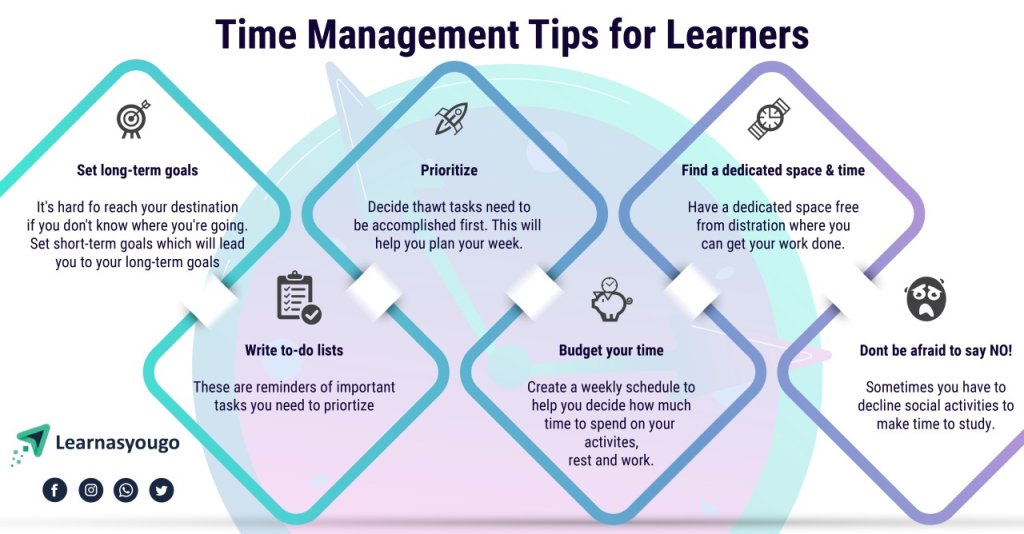
  • How to Manage Time While Learning Multiple Topics

    It’s exciting to want to learn everything. One moment you’re deep into digital marketing, the next you’re watching coding tutorials, and before you know it, you’re curious about psychology or finance. The world has so much knowledge to offer, and learning multiple topics at once feels like unlocking different parts of your brain. But the truth? It’s not easy to manage your time when you’re juggling different areas of study. Without structure, you’ll end up halfway through ten things instead of mastering two.

    Still, it’s completely possible to balance it all — if you approach it with strategy, discipline, and a bit of self-awareness.

    Let’s break it down step-by-step, in a realistic way.

    1. Understand Why You’re Learning Each Topic

    Before you even touch a schedule or a time planner, ask yourself this simple question: Why am I learning this?

    When you study multiple things at once, not every topic needs the same amount of attention or energy. Some things are career-focused (like learning data analysis), others might be curiosity-based (say, photography or a new language). The “why” behind your learning helps you prioritize.

    For example, if your goal is to switch careers into web development, that subject deserves daily focus, while something like learning guitar could be 2–3 times a week. The moment you understand purpose, you stop spreading yourself too thin.

    2. Break Your Week Into Learning Blocks

    The biggest mistake people make is trying to study everything every day. That’s a fast way to burn out and remember… almost nothing.

    Instead, divide your week into focus blocks. For instance:

    • Monday & Tuesday: Core topic (e.g., coding)
    • Wednesday: Complementary topic (like UX design or digital tools)
    • Thursday: Reading or general learning
    • Friday: Creative subject (e.g., writing, drawing, etc.)
    • Weekend: Review or light exploration

    This system works because your brain loves consistency. You’re training it to expect certain subjects on certain days, which makes switching easier and less mentally exhausting.

    Also, always include buffer time. Life happens — meetings, mood swings, low energy days. Don’t pack your schedule to the last minute.

    3. Use the “One-Topic-Per-Session” Rule

    Multitasking feels productive but it kills actual progress. You might think you can watch a programming tutorial while reading marketing blogs, but your brain isn’t built for that.

    Instead, create focused sessions. Spend 45–90 minutes on one single topic, then take a short break before moving to the next one. During that session, remove distractions — phone off, no social media tabs open, no switching.

    You’ll be surprised how much deeper you learn when you stop jumping between topics mid-session.

    4. Create a Tracking System (But Keep It Simple)

    You don’t need a fancy Notion dashboard or a complicated productivity app — though you can use them if you enjoy it. What matters is having a way to track progress.

    A simple Google Sheet, notebook, or even a whiteboard works fine. Just note:

    • What topic you studied
    • How long you studied it
    • What specific concepts you covered
    • What’s next

    This not only helps you stay organized but also gives you a psychological boost when you see your progress growing week by week.

    5. Mix Learning Styles

    One common trap is trying to study everything in the same way — reading, reading, reading. But when you’re handling multiple topics, variety helps you stay mentally fresh.

    Try this:

    • Watch videos for visual-heavy topics (like design or art).
    • Read articles or books for theory-based learning (like economics or history).
    • Practice hands-on for skill-based areas (like coding, writing, or speaking a new language).

    Switching between styles keeps things interesting and prevents mental fatigue. It’s also proven that multi-sensory learning (visual + auditory + kinesthetic) improves long-term memory.

    6. Set Micro-Goals for Each Subject

    Big goals like “learn data analysis” or “master photography” are too vague. They drain motivation because progress feels invisible.

    Instead, break everything down into micro-goals — tiny, trackable tasks that you can finish in a week.

    Example:

    • “Learn basic Excel formulas” instead of “learn Excel.”
    • “Shoot and edit one 2-minute video” instead of “get better at video editing.”

    Each completed micro-goal gives you a small win, and those add up. You’ll actually feel like you’re learning instead of endlessly chasing vague mastery.

    7. Protect Your Focus Time (Non-Negotiable Hours)

    When you’re studying several topics, the biggest enemy isn’t complexity — it’s distraction.

    Social media, random YouTube recommendations, phone notifications — all can break your rhythm. The trick is to create non-negotiable study blocks every day or every few days. During these hours, nothing else gets your attention.

    It could be 7–9 AM before work, or 9–11 PM if you’re a night owl. The time doesn’t matter — the consistency does. Treat these blocks as seriously as a meeting with your boss.

    8. Learn How to Switch Context Smoothly

    Switching between topics can create “mental lag.” You finish studying finance and jump straight into language learning — your brain feels scattered.

    To fix that, give yourself short transition rituals. For example:

    • Take a 10-minute walk
    • Stretch, get water, breathe deeply
    • Quickly review what you learned before switching

    This helps reset your mind and improves focus for the next topic.

    9. Don’t Study for Too Long

    Here’s something most people get wrong: more hours ≠ more learning. Your brain retains information best in shorter, focused bursts.

    The Pomodoro technique (25 minutes focus + 5 minutes break) or even 90-minute deep sessions work far better than marathon study days.

    It’s better to do three 1-hour sessions across the day than one 6-hour block of cramming. When you rest, your brain consolidates memory — so taking breaks is actually part of learning, not avoiding it.

    10. Reflect and Adjust Weekly

    Every week, sit down for 15 minutes and ask yourself:

    • What did I learn this week?
    • Which topics took more time than I expected?
    • Am I spreading myself too thin?

    Adjust accordingly. Sometimes, you’ll realize one subject needs to pause while another deserves more attention — and that’s fine. Flexibility is key.

    Learning multiple things isn’t about rigid discipline. It’s about rhythm — knowing when to push, when to pause, and when to switch gears.

    11. Avoid Guilt and Comparison

    This part matters a lot. You’ll see people online mastering skills faster, or finishing courses you barely started. That’s okay. Everyone’s pace is different. The point of learning multiple topics isn’t competition; it’s curiosity and personal growth.

    Some weeks you’ll be super productive, others… not so much. The key is not to quit because of guilt. Consistency beats intensity every single time.

    12. Stay Curious and Reward Yourself

    When you’re managing multiple learning paths, burnout is always around the corner. Keep curiosity alive by connecting what you learn. Notice how coding teaches logic, which helps in problem-solving for business. Or how psychology improves your writing.

    Reward yourself for finishing milestones — watch a movie, take a day off, or just appreciate your progress. Learning should feel fulfilling, not punishing.

    Final Thoughts

    Managing time while learning multiple topics is less about working harder and more about working smarter. Know your priorities, plan learning blocks, protect your focus, and allow rest. Remember — your brain isn’t a machine. It needs time to absorb, connect, and reflect.

  • Hello world!

    Welcome to WordPress. This is your first post. Edit or delete it, then start writing!

  • Role of Natural Language Processing in Online Learning


    Online learning has become an integral part of education in the 21st century. With the growth of digital platforms, virtual classrooms, and e-learning resources, students now have access to education anytime and anywhere. However, the challenge remains: how can educators ensure personalized, interactive, and effective learning experiences in an online environment? Natural Language Processing (NLP), a branch of artificial intelligence, is increasingly playing a pivotal role in addressing these challenges. By analyzing and understanding human language, NLP helps create smarter, more adaptive online learning experiences.

    1. Enhancing Communication in Virtual Classrooms
    One of the primary applications of NLP in online learning is enhancing communication between students, instructors, and platforms. Online courses often rely heavily on text-based interactions, including discussion forums, chatbots, and emails. NLP algorithms can analyze these communications to extract meaning, detect sentiment, and provide actionable insights.

    For instance, NLP can summarize long discussion threads, highlight key points, or identify students who are struggling based on their messages. Chatbots powered by NLP can answer routine student queries, provide explanations, or guide learners to relevant resources. This reduces response time and ensures that students remain engaged, even in large online courses with hundreds of participants.

    2. Personalized Learning Experiences
    NLP allows online learning platforms to understand individual learners’ needs better. By analyzing written responses, forum participation, and assignment submissions, NLP algorithms can detect patterns in language use that indicate comprehension levels, areas of difficulty, or engagement.

    For example, if a student consistently uses vague or incorrect terminology in essays, the system can suggest specific learning materials, exercises, or feedback targeted at improving vocabulary and conceptual understanding. Similarly, adaptive learning systems can use NLP insights to recommend personalized content, ensuring each student receives instruction suited to their skill level and learning style.

    3. Automated Assessment and Feedback
    Traditional assessment methods can be time-consuming, especially when evaluating written work. NLP transforms this process by enabling automated evaluation of essays, reports, and open-ended responses.

    Advanced NLP systems can check grammar, sentence structure, coherence, and even content relevance. Some platforms use NLP to assess critical thinking and argument quality, providing detailed feedback almost instantly. This not only reduces instructor workload but also gives students immediate guidance, allowing them to learn from mistakes and improve continuously.

    4. Intelligent Tutoring Systems
    AI-driven tutoring systems increasingly rely on NLP to provide interactive, human-like guidance. These systems can understand questions posed by students in natural language and respond with explanations, hints, or examples tailored to the learner’s context.

    For example, a student struggling with a physics problem can ask an NLP-enabled tutor, “Why does the object accelerate in this direction?” The system interprets the query, identifies key concepts, and provides an appropriate explanation or resource. This interaction mimics human tutoring while offering scalability, as the system can serve hundreds of students simultaneously.

    5. Improving Accessibility and Inclusivity
    NLP plays a vital role in making online learning accessible to diverse learners. Text-to-speech and speech-to-text technologies, powered by NLP, help students with visual impairments or reading difficulties. Automatic translation tools enable learners from different linguistic backgrounds to access content in their preferred language.

    Additionally, NLP can detect and simplify complex language in course materials, making content easier to understand for non-native speakers or students with learning difficulties. This fosters inclusivity and ensures that online education reaches a broader audience.

    6. Sentiment Analysis and Engagement Monitoring
    Understanding student engagement is crucial in online learning. NLP enables sentiment analysis, which can interpret the tone, emotion, and motivation in student communications.

    For instance, negative sentiment or frustration detected in forum posts or assignments may indicate disengagement or comprehension challenges. Instructors can be alerted to intervene proactively, offering support or adjusting course content. Similarly, NLP tools can identify highly engaged students, highlighting behaviors and practices that can be modeled for others.

    7. Knowledge Extraction and Content Recommendation
    NLP helps in extracting valuable insights from vast amounts of text-based content. Online courses often provide extensive reading materials, research articles, and discussion forums. NLP algorithms can summarize documents, highlight key concepts, and recommend related resources to students, facilitating more effective learning.

    Recommendation systems powered by NLP can suggest articles, videos, or exercises based on the student’s learning history, interests, and performance. This dynamic approach reduces information overload and ensures that learners focus on content most relevant to their goals.

    8. Challenges and Ethical Considerations
    Despite its potential, NLP in online learning faces challenges. Language is inherently complex and context-dependent, making accurate interpretation difficult. Idioms, sarcasm, or ambiguous phrasing can confuse algorithms.

    Data privacy is another concern. NLP systems require access to student communications, which must be handled securely and in compliance with regulations. Additionally, over-reliance on automated feedback may reduce human interaction, which is essential for emotional support and mentoring in education.

    9. Future Prospects
    The future of NLP in online learning is promising. Advancements in deep learning and natural language understanding are improving the accuracy and contextual awareness of these systems. Future platforms may combine NLP with AI-driven predictive analytics to anticipate student needs, recommend interventions before challenges arise, and provide fully interactive, conversational learning environments.

    Integration with virtual reality (VR) and augmented reality (AR) could further enhance experiential learning, where NLP interprets student queries in immersive simulations, providing real-time guidance and adaptive feedback.

    Conclusion
    Natural Language Processing is reshaping online learning by enabling personalized, interactive, and inclusive educational experiences. From enhancing communication and automating assessment to providing intelligent tutoring, sentiment analysis, and content recommendations, NLP plays a central role in modern e-learning. While challenges such as context understanding, data privacy, and reduced human interaction remain, the benefits of NLP are undeniable. As technology continues to advance, NLP will become an integral part of higher-quality, accessible, and effective online education, transforming the way students learn, interact, and succeed in digital classrooms.

  • Benefits of AI-Powered Plagiarism Detection Tools

    Academic integrity has always been a cornerstone of education, but in the digital age, maintaining it has become increasingly complex. With the vast availability of online resources, students sometimes unintentionally—or intentionally—copy content without proper attribution. This is where AI-powered plagiarism detection tools are transforming education. By leveraging artificial intelligence, these tools help educators ensure originality, maintain academic standards, and support learning.

    1. Accurate Detection of Plagiarism
    Traditional methods of checking plagiarism, such as manual review, are time-consuming and often incomplete. AI-powered tools, however, can scan vast amounts of text, including online articles, journals, and previous student submissions, to detect similarities.

    These systems go beyond simple keyword matching. They can identify paraphrased content, synonyms, and even structural similarities in sentences. For example, a student who changes the wording of a paragraph but retains the original idea can still be flagged by AI. This level of accuracy ensures that academic dishonesty is minimized and that students learn the importance of original work.

    2. Saving Time for Educators
    One of the most significant benefits of AI-powered plagiarism detection tools is efficiency. Instructors often manage multiple assignments and large classes, making manual plagiarism checks nearly impossible.

    AI systems can automatically scan student submissions, generate detailed similarity reports, and highlight suspicious sections. This automation saves educators hours of work, allowing them to focus more on teaching, mentoring, and providing constructive feedback rather than spending excessive time on administrative tasks.

    3. Encouraging Academic Integrity
    Plagiarism detection tools serve as a deterrent for students. Knowing that AI systems can detect copied content encourages learners to develop their own ideas and engage more deeply with the material.

    Beyond deterrence, these tools also help educate students about proper citation practices. Some AI platforms provide explanations on why certain sections are flagged and suggest ways to paraphrase or cite sources correctly. This not only prevents plagiarism but also promotes responsible academic behavior and lifelong learning habits.

    4. Supporting Learning and Skill Development
    AI-powered plagiarism detection is not just about punishment; it can be an effective learning tool. By providing immediate feedback on submitted work, students can understand where they went wrong and how to improve.

    For example, if a section of an essay is flagged, the student can learn to paraphrase better, properly cite references, or synthesize information in their own words. Over time, this feedback loop helps students enhance research skills, critical thinking, and academic writing proficiency.

    5. Handling Large Volumes of Data
    In higher education, institutions often deal with thousands of student submissions across multiple courses. Manually reviewing each document for originality is impractical. AI-powered tools can process large volumes of data simultaneously, ensuring consistency and thoroughness in plagiarism checks.

    These tools can also compare submissions across semesters, ensuring that recycled work from previous students does not go unnoticed. This capability maintains fairness and reinforces the value of original contributions across the academic community.

    6. Integration with Learning Management Systems (LMS)
    Modern AI plagiarism tools are often integrated with Learning Management Systems (LMS) like Moodle, Canvas, or Blackboard. This integration streamlines the submission, analysis, and reporting processes.

    Students can submit assignments directly to the LMS, where AI automatically checks for originality and generates a report. Educators can view detailed analysis, including similarity percentages, highlighted text, and source references, all within the platform. This seamless workflow reduces administrative hassle and improves the overall efficiency of course management.

    7. Supporting Multilingual and Diverse Content
    AI-powered plagiarism tools are increasingly capable of handling multilingual content. They can detect copied material across different languages by analyzing semantic similarity, not just exact text matches.

    This is particularly important in global education settings where students may use resources from multiple languages. AI ensures fairness and consistency in evaluating submissions, regardless of linguistic diversity, promoting equitable assessment standards.

    8. Challenges and Considerations
    Despite their benefits, AI-powered plagiarism detection tools are not without limitations. Over-reliance on automated systems may result in false positives, where properly cited or common phrases are flagged incorrectly.

    Privacy concerns are also significant, as student submissions are analyzed and stored in databases. Institutions must ensure compliance with data protection regulations and maintain transparency about how student data is used. Additionally, human oversight remains crucial to interpret reports, provide context, and apply academic judgment fairly.

    9. Future Prospects
    The future of AI-powered plagiarism detection is promising. Advanced machine learning models may soon provide even more nuanced analysis, detecting subtle forms of content borrowing, idea plagiarism, or even AI-generated text. Integration with AI writing assistants could offer real-time guidance while students compose their assignments, preventing plagiarism before it occurs.

    Furthermore, predictive analytics could help educators identify patterns of academic dishonesty and intervene early, fostering a culture of integrity and responsibility across institutions.

    Conclusion
    AI-powered plagiarism detection tools are revolutionizing how educators maintain academic integrity. By providing accurate detection, saving time, promoting learning, and supporting fairness, these tools offer immense benefits to both instructors and students. While challenges such as false positives and privacy concerns exist, the advantages far outweigh the drawbacks when combined with human oversight. AI is not just a policing mechanism; it is an educational ally, helping students learn the value of originality, proper citation, and ethical academic behavior. In the digital era, such tools are essential for nurturing integrity and excellence in education.