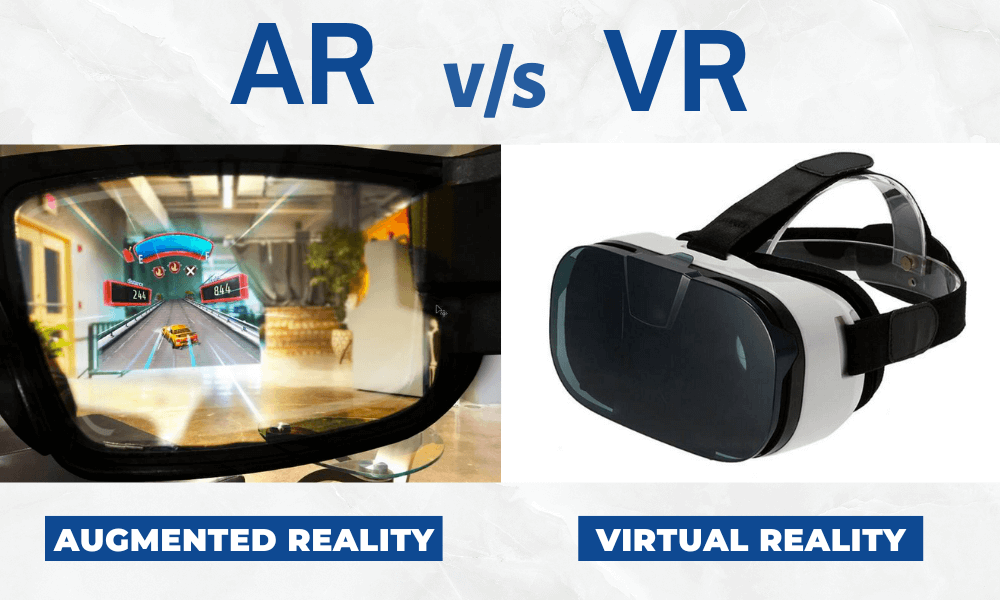
Virtual Reality (VR) and Augmented Reality (AR) are two amazing technologies that are changing how we see and interact with the world. Though they sound similar, they are quite different.
What Is Virtual Reality?
Virtual Reality creates a fully digital world. When you wear a VR headset, you are completely immersed in a computer-generated environment. Gamers, for example, can explore fantasy worlds or simulate real-life situations.
What Is Augmented Reality?
Augmented Reality adds digital elements to the real world. For example, using your phone camera, AR can show how a sofa would look in your living room or display directions on the street in real time.
Key Differences
| Feature | Virtual Reality | Augmented Reality |
| Environment | Fully virtual | Real world + digital elements |
| Device | Headset or goggles | Smartphone or AR glasses |
| Interaction | Immersive and isolated | Interactive and blended |
| Example | VR gaming | Pokémon Go, Snapchat filters |
Applications
- VR in Education: Students can explore historical events or visit virtual museums.
- AR in Shopping: Customers can try products virtually before buying.
- VR in Medicine: Doctors train in virtual surgeries without risks.
- AR in Navigation: AR maps show routes and nearby landmarks directly on your screen.
Future of AR and VR
As technology improves, VR and AR will merge into Mixed Reality, where digital and physical worlds blend seamlessly. These technologies will change gaming, education, training, and communication forever.
Conclusion
Both VR and AR expand how we experience reality. While VR takes you to another world, AR brings the digital world into yours — together, they represent the future of digital interaction.
Leave a Reply