Introduction
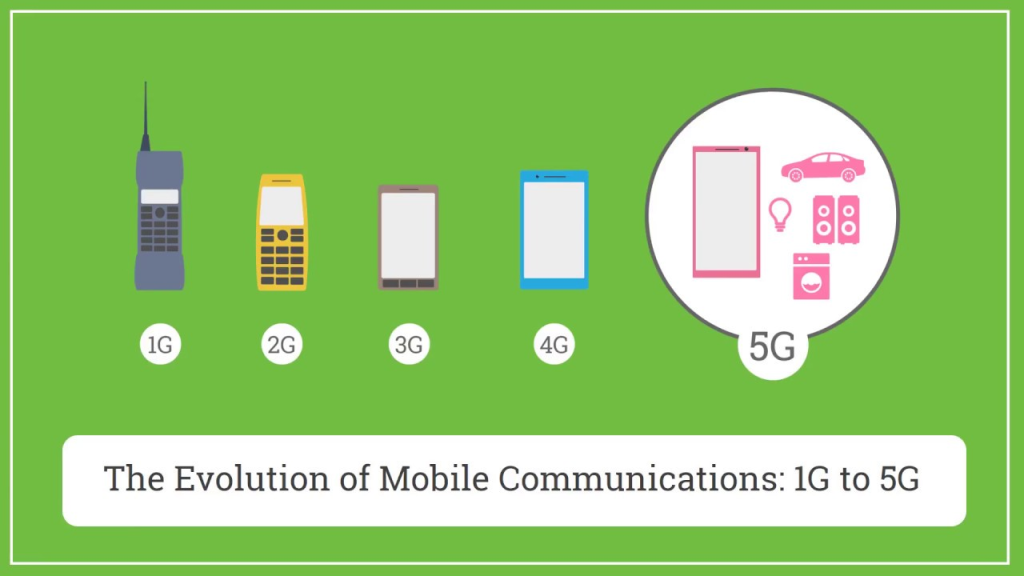
The story of mobile technology is one of constant innovation and transformation. From the early days of bulky phones that could only make voice calls to today’s superfast 5G networks, the journey has been remarkable. Mobile communication has changed how people connect, learn, work, and live. It has become a vital part of modern society.
This article explores the evolution of mobile technology from 1G to 5G, how each generation improved connectivity, and what the future might hold as we move toward 6G and beyond.
1. The Beginning: 1G (First Generation)
The first generation of mobile networks, known as 1G, was launched in the 1980s. It was the first time people could make wireless voice calls using mobile phones. However, these phones were very large, heavy, and expensive.
Key Features of 1G:
- Based on analog signals
- Only supported voice calls
- Very limited coverage and poor sound quality
- No data or text messaging
The 1G era was revolutionary for its time because it introduced the idea of mobile communication. But the analog technology used had many drawbacks — calls were often noisy, the connection was weak, and there were serious security issues since calls could be easily intercepted.
2. The Digital Shift: 2G (Second Generation)
In the 1990s, the world moved to 2G, which introduced digital networks. This was a major leap forward. Phones became smaller, sound quality improved, and most importantly, users could send text messages (SMS) for the first time.
Key Features of 2G:
- Switched from analog to digital signals
- Introduced SMS and MMS (Multimedia Messaging)
- Better voice clarity and security
- Allowed basic internet access (WAP)
With 2G, communication became faster and clearer. People began to rely on their phones for more than just calling — texting became a new way to connect. The most popular 2G standard was GSM (Global System for Mobile Communications), which became the foundation for global mobile networks.
3. Internet Arrives: 3G (Third Generation)
The early 2000s saw the rise of 3G, which brought the internet to mobile phones. For the first time, people could browse websites, send emails, and watch videos on their devices.
Key Features of 3G:
- High-speed internet access
- Video calling support
- Multimedia sharing
- Data transfer rates up to 2 Mbps
3G made smartphones popular and enabled new services like mobile banking, app stores, and online gaming. It transformed mobile phones from simple communication tools into small computers. The technology behind 3G — UMTS (Universal Mobile Telecommunications System) — helped spread internet access across the globe.
4. The Age of Speed: 4G (Fourth Generation)
By the late 2000s, mobile users demanded faster internet for streaming and high-quality video calls. This led to 4G, the next step in mobile evolution.
Key Features of 4G:
- Very high-speed internet (up to 100 Mbps)
- Smooth HD video streaming and online gaming
- VoIP (Voice over Internet Protocol) calls
- Better reliability and global roaming
4G networks are based on LTE (Long Term Evolution) technology, which improved data transfer speeds dramatically. This made possible the rise of apps like YouTube, Netflix, and Zoom. People could now work, study, and entertain themselves directly from their phones.
4G also paved the way for the mobile economy, enabling services like ride-sharing, food delivery, and mobile payments.
5. The Smart Revolution: 5G (Fifth Generation)
The latest generation, 5G, is transforming the digital landscape. It offers ultra-fast speeds, low latency, and the ability to connect millions of devices at once.
Key Features of 5G:
- Speeds up to 10 Gbps
- Latency (response time) as low as 1 millisecond
- Supports the Internet of Things (IoT)
- Enhances technologies like AI, AR/VR, and autonomous vehicles
With 5G, not only smartphones but also cars, machines, and smart homes can connect seamlessly. It’s enabling smart cities, remote surgeries, and industrial automation. 5G networks are being rolled out globally, and they promise to revolutionize how humans and machines interact.
6. Challenges and Concerns
While mobile technology has advanced rapidly, it also brings challenges. Some concerns include:
- Privacy and data security: As more devices connect, protecting data becomes harder.
- Health concerns: Some people worry about radiation, though scientific studies show no proven harm from 5G frequencies.
- Digital divide: Not everyone can access high-speed networks, especially in rural areas.
Addressing these issues is essential to ensure that technology benefits everyone equally.
7. The Future: 6G and Beyond
Even as 5G is expanding, researchers are already working on 6G, expected around 2030. It will be even faster, with speeds possibly reaching 1 terabit per second. 6G will use artificial intelligence to manage networks automatically and provide real-time experiences like holographic communication.
Future mobile networks may merge physical and digital realities, supporting brain-computer interfaces, virtual environments, and fully autonomous systems.
Mobile technology could soon become invisible — woven into our clothes, homes, and even our bodies. The boundary between the human and digital worlds will continue to blur.
Conclusion
From the humble beginnings of 1G to the revolutionary 5G era, mobile technology has completely changed human life. Each generation has made communication faster, easier, and more powerful.
As we look toward 6G and beyond, one thing is certain: the evolution of mobile technology will continue to shape our future, connecting people and devices in ways we have only begun to imagine.
Leave a Reply